All about Keeping Alpacas - Alpaca Food, Care, Health Guide and Videos
All about keeping alpacas, looking at what alpacas eat, general care, housing, and health problems.
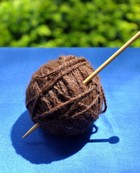
We also have alpaca knitting yarn for you to make those alpaca clothes you have always liked, and some alpaca books that will give you further information on how to look after your herd.
OVERVIEW:
Keeping alpacas for profit used to be seen as a sure investment for homesteading today and farming. High returns were promised with alpaca investment in raising and keeping alpacas, and many believed that they would make a lot of money in the process, without doing a proper alpaca business plan and thorough investigation.
Unfortunately, those who went ahead keeping alpacas for profit, outlaying thousands for top breeders in the hope that they would get rich quick have found that this has not been so, and the price of alpacas has become far more affordable for those who just want to keep alpacas as pets or raising alpacas for wool.
There is money in keeping alpacas for their lovely fiber, which is well-sought out, however, alpacas will not make you millionaires.
What are Alpacas and what is the Difference between a Llama and an Alpaca?
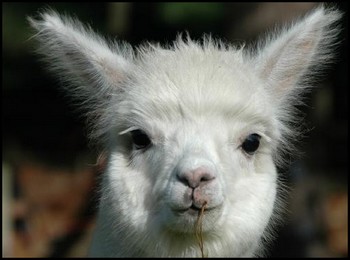 So what are alpacas and how are they different
to llamas?
So what are alpacas and how are they different
to llamas? The alpacas and llamas both come from the camelid family but they are not nearly as bad tempered and smelly as their relative the camel, and are closer to llamas.
Llamas are larger than alpacas, but despite their size, alpacas give more wool as their wool is fine and in a single layer, whereas the llama has a rough outer coat, and a fine undercoat that doesn't yield as much wool. Llamas were bred as pack-animals and have never been bred for their fiber. Because of their straighter backs they make good pack-animals, and the llama has curved ears and the alpaca has straight ears.
There are 2 types of alpacas; Huacayas, which make up about 80 % of the US market and Suri. The difference is in their fleece structure. Where the huacayas have dense, short fleece, the Suri's fleece is a lot longer and silkier.
The Suri will produce about 2.5 kg of fleece after being shorn, and the Huacayas will produce about 2-3.5 kg of fleece.
Keeping Alpacas as Pets
Alpacas are ideal animals for the small homestead. There really is joy in keeping alpacas as they are an easy care livestock. They are hardy, generally disease-resistant and they thrive in every weather condition imaginable. They are good with children and therefore alpacas make excellent pets. They almost always give birth during daylight hours, and is a novel experience for the kids, and also less stressful for mom and dad!
Because alpacas are such a gentle farm animal they are the ideal homestead animal to keep as a pet and the nice thing is that they last a lot longer than your budgie or hamster will - they live 15-25 years.
Keeping Alpacas and Breeding Cycles
The alpaca is not bound by a breeding season like sheep, and so therefore they will mate at any time and drop their cria (baby) after a gestation period of about 11-12 months. Many alpaca births occur during the rainy season. They usually only have single births, which makes them more valuable and sought after and their pregnancies and deliveries are usually without complications. The adults grow to a height of 5 feet.
If something happens to the mother, or she is unable to suckle her young, other female alpacas who have recently given birth will take on the cria and nurse it without complications. They are therefore excellent surrogate mothers.
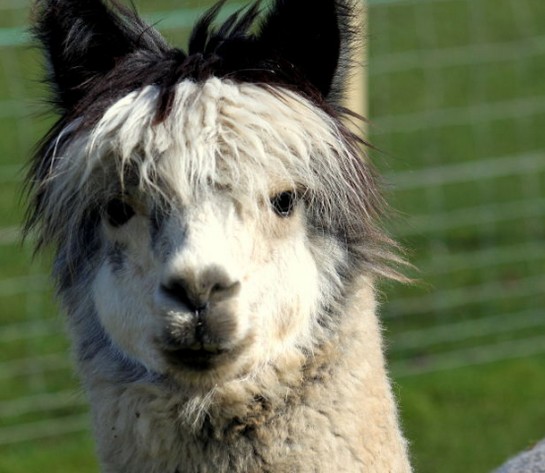 The Joy of Keeping Alpacas
Advantages of Keeping Alpacas
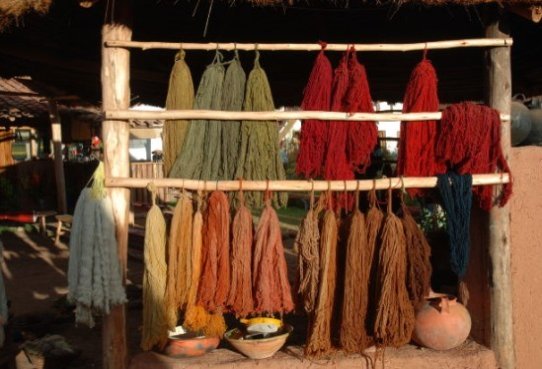
Keeping alpacas does have other advantages, mainly of course the alpaca wool that they produce. Their lovely fiber is light-weight, less greasy than sheep's wool, and is know for its softness, luster and warmth. In fact, the alpaca's wool is seven times warmer than sheep's wool and softer than cashmere.As a result alpaca knitting yarn is well sought after by knitters and the fiber is used by those interested in spinning yarn themselves.
Alpacas come in a range of colors which is ideal for those who want to use fiber that is natural and free from chemical dyes. In addition, they are eco-friendly with soft padded feet, not hooves, which has a low impact on the landscape.
For those of you who are wanting to keep alpacas for wool then it is useful to think of having 2-3 castrated males. As alpacas are herd animals they need to have the company of other alpacas. Buying whethers is a cheaper option than buying breeding quality alpacas. In addition they can be shorn twice a year, and, as mentioned, their fleece can be used for home spinning, felting or weaving.
Because of their excellent range of vision they make excellent 'guard dogs' and will keep predators away from your sheep and are good at protecting their own young. Not only will alpacas protect your sheep, but they will also protect your chickens and ducks from foxes and wolves.
The best thing for the organic alpaca farmer and homesteader is the alpaca manure and their toilet habits. Alpacas are very obliging in that they choose one place to relieve themselves and soon you have a manure heap of good, non-smelling, slow-releasing manure which is ideal for your vegetables, orchards and flower gardens.
Alpaca Food and What to Feed Alpacas?
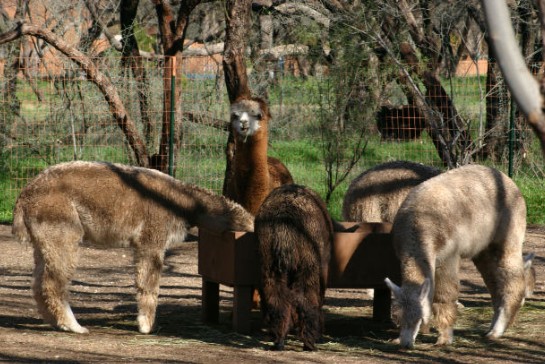

There are a number of commercial alpaca food mixes available, but these are best thought of as supplying vitamins and minerals rather than the bulk feed which is obtained through grazing.
How to raise alpacas successfully with few health problems when they first arrive onto your farm is to introduce any changes to the diet gradually over a period of a couple of weeks. This way the microbes in the gut have time to adjust to any feed changes.
Keeping Alpacas and General Care
They do, however, need a lot of water, particularly in the summer, where they can drink up to 4 liters of water a day. They will need some shelter, usually a 3-sided structure is sufficient so that they can get out of the wind, sun and rain when required.
Also, make sure that their field has a fence of at least 4 feet to keep stray dogs and coyotes out.
Always make sure that your alpacas have shade and water at all times. Shade created by trees, shade cloth or better still, a tall barn that will give shelter and ventilation. Having fans fitted is also a solution in areas of high heat and humidity.
Plenty of water should be made available, and it should be kept out of the sun in a shady spot.
Keeping alpacas also includes shearing. Shearing alpacas when it is hot is another way of reducing the possibility of heat stress. A full shear is better, although barrel cuts are acceptable.
Make sure that your animals are well fed, but not overfed, as overweight animals suffer more from the heat than those that aren't obese. Proper nutrition of the animals is also an important of raising heathy alapacas. In particular, providing adequate selenium, vitamin E, copper, zinc, and B vitamins such as thiamine can increase the tolerance of environmental extremes.
Keeping Alpacas and Health Problems
The alpaca is not used to high temperatures and humidity. As a result, if they can suffer from heat stress, which can lead to illness and ultimately death if not caught in time.
Commonly used is the heat index, which is simply a formula to estimate the risk of heat stress. The Heat Index can be estimated by adding the temperature (F) and percent humidity (%). Typically, a heat index of less than 120 is safe, 120 to one 180 creates possible problems, and greater than 180 is the range where animals are in the most danger.
When raising alpacas keep a close eye on your animals during the hot summer months and look for the signs of heat stress. Nasal flaring, open-mouthed breathing, increased breathing rate and effort, drooling, depression or dullness, not eating feed, scrotal swelling in intact males, weakness, trembling, a rectal temperature greater than 104 degrees F, a heart rate over 90 beats per minute, or a respiratory rate over 40 breaths per minute are all signs of heat stress in alpacas and show that things are not well.
Move the animal into a shaded area of your homestead and hose the animal down with cool water, making sure that the animal is thoroughly soaked and not just wet on the surface, as the fibers can trap the heat and make things worse. Try and get the animal to drink some water, and call your vet immediately.
Keeping Alpacas and Other Health Problems:
An alpaca can suffer from:
* mange, tick paralysis and ring worm
* foot and mouth disease
* rabies which they can pick up from dogs and foxes
* Hydatid disease
Looking for Alpacas for Sale?
So you have decided that
you would like to keep alpacas but
you are not
sure where to buy your herd from. There are a number of options for
securing your herd when raising alpacas:
1) From a registered Alpaca Breeder
2) From an Alpaca Rescue organization
3) From Alpaca Auctions
Of course, you are always sure of buyihng quality stock through a registered alpaca breeder, but unfortunately, it comes with a cost. Buying alpacas are not cheap, and one of the better deals is to buy pregnant dam.
Otherwise, build
your flock up slowly, but if you are using your own breeding stock be
on the look out for weaknesses in the herd and be aware that multiple
births when raising alpacas is very rare, and so you will be building
your herd very slowly.
Finally, you can look at buying your alpacas through an alpaca rescue organization.
There are many organizations you offer this service in order to keep
the animals out of the auction ring. Not all these animals have been
abused, but through changing circumstances owners find that they can no
longer look after the herd and so they end up at the alpaca rescue
centers. There are many alpaca rescue organizations on the Internet, so
see if there is a center in
your area first. In my opinion, this is the cheaper option, and you are
also doing a good deed by rescuing these animals and offering them a
good home.
Did you find this page helpful?
Sharing is a way of saying, "Thanks!"
Follow Us and Keep Up to Date
Alpaca Books for Further Information on Keeping Alpacas and Experiencing the Joy of Alpacas in General
Alpaca Knitting Yarn for Sale
Videos on Keeping Alpacas
An excellent video on an introduction to the Suri AlapacasA Video on 4H Training Alpacas
A great video for your kids on 4H training and keeping alpacas as pets.A Video on Alpaca Shearing - Shearing a Cria
A comprehensive guide to shearing a cria is a video by Mary Jane Fox that takes you from the tools and supplies you'll need to step-by-step instructions and techniques to make your shearing day a success.You can Add your own Comments, Tips and Ideas on Keeping Alpacas Here or Contact us on Facebook Below!
We have lots of pages where you can contribute to throughout this homesteading website. We love hearing from our readers, and hope you will be one of those we hear from too. Look around our homesteading website. If you have some comments, tips and ideas about keeping alpacas of your own, please submit them. All you need to do is type and submit. We will do the rest!
Leave a Comment
Do you have anything that you would like to add after reading this page? We would love to hear your thoughts. If you can add additional information to what has been written here you will be adding value to the website! No need to have any special skills - just type and submit. We will do the rest!





New! Comments
Do you have something of value to add? Leave me a comment in the box below.