How to Grow Broad Beans; Varieties, Soil Conditions, Harvest, Yields
These beans producing in late winter and springtime are a very popular and under-rated vegetable and a useful crop because they can be grown at a time when few other crops are bearing. Eaten whole as young pods, before the seed develops, they almost reach gourmet status. The market generally demands the more mature and longer beans. Care must be taken to harvest them before the pods become over-mature as the quality rapidly deteriorates.
Growing broad beans for a cover crop is one of the finest as they are excellent nitrogen fixers.
The broad bean is also known as other names around the world such as the fava bean, field bean, bell bean, horse bean or tic bean.
The broad bean falls into 3 main categories;
- long pod broad beans,
- short pod broad beans and
- dwarf broad beans
How to Grow Broad Beans and Broad Bean Varieties
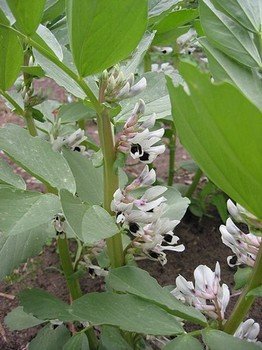 For
those of you who have limited space in your
vegetable gardens you may think about planting dwarf broad
beans as they produce clusters of pods on small bushes
that don't
grow very high. The
Sutton is an
excellent dwarf broad bean that grows to
about 30 cm, matures early and has white seeds in the pods.
For
those of you who have limited space in your
vegetable gardens you may think about planting dwarf broad
beans as they produce clusters of pods on small bushes
that don't
grow very high. The
Sutton is an
excellent dwarf broad bean that grows to
about 30 cm, matures early and has white seeds in the pods.One of my favorite broad bean varieties is the Aquadulce Claudia, it is a long pod which has a sweet, nutty flavor and is an early cropper. The pods of this plant tend to grow away from the plant at an upward angle.
Another favorite is the Long pod or Leviathan which has pods growing to 20 - 25 cm in length, and bushes that grow to up to 1.5 meters high. A good variety for colder climes as it is resistant to frosts and is a prolific bearer. These pods are pendulous.
However, there are other varieties which are just as popular such as other dwarf varieties such as Midget and Coles Dwarf, and Long pods and Short pods such as the Egyptian Brown, Red Epicure and Scorpio, among others.
How to Grow Broad Beans, Climate and When to Plant
A fall sowing prevents black fly attack. If you live in a colder climate, sow your beans in early spring after the frosts have gone. Do not attempt to grow broad beans in tropical or hot climates as the flowers will not set. They prefer a cool, moderate climate.
How to Grow Broad Beans and Crop Rotation
Brassica crops are also a good choice to follow broad beans. Alternatively, a green manure crop could be sown to use the nitrogen made available by the broad bean roots. The procedure would be to mulch down or incorporate the bean stalks into the top few centimeters of the soil. Leave for a fortnight, cultivate again, and sow the green manure crop. This would in turn be incorporated into the soil in readiness for the next crop.
.

How to Grow Broad Beans and Soil Preparation
They are gross feeders and have extensive roots, so raised beds, high in organic matter prepared as above, with good aeration would be ideal. The addition of a compost would be very worth while. Broad beans, need good levels of calcium and magnesium to grow successfully, and will grow well in an acid soil as long as these nutrients are supplied. This is why adding dolomite is so important to growing broad beans successfully.
Along with good drainage, the availability of potash is important in helping to prevent 'chocolate spot' fungus that can attack your growing broad beans. Potash may be added in the form of rock dust, seaweed meal or ash from your fireplace as long as you burn untreated timber.
How to Grow Broad Beans and Sowing Seeds
Broad bean seeds should be placed 3 inches below the surface, in double rows at a spacing of about 10 inches. The double rows offer better support for the plants in a fertile soil. They will also create a micro-climate for your plants creating much needed humidity for fruit-setting. The rows should be spaced about 3 feet apart and should be set out well to allow for maximum drainage.
Another way of planting broad beans is to plant 2 seeds in each hole. That way, when the plants grow, they can support each other in windy conditions, and you will also double your chances of germination. However, if you live in a warmer climate, planting like this is not advised as it compromises good airflow and could lead to fungal diseases.
Your seeds should start to germinate within 7 days. As soon as the shoots appear keep the soil free from weeds and loosen it occasionally. To provide extra support, you can build up the soil around the base of the stalks.
Even before your crop has begun to emerge it would be still be prudent to make sure that you have hoed well around your rows to keep any competitive weeds at bay.
Because of the high nitrogen in the soil as a result of growing your broad beans, - remember legumes put back nitrogen in the soil, so you will find that weeds are your major problem to control.
How to Grow Broad Beans - Pests and Diseases
Broad Bean Pests
If you find your beans infected with blackfly or bean weevil, you can spray them with soapy water.
As the bean plants grow, especially the long pod variety you will need to stake your plants to protect them from being damaged by the wind. Banking the soil around the stems of the plants also give added protection. You can then run a single or double line of string, depending on the growth, along each side of the double rows to give support when the pods begin to fill and the plants become top-heavy.
For extreme cases of black fly aphid you can spray with derris dust.
Broad Bean Diseases
As mentioned earlier 'chocolate-spot' fungus is a problem for broad beans, especially if the plants are grown during prolonged wet periods. Both the leaves and the stems can become infected. Chocolate Spot can be minimized by improving the soil structure, thus allowing better drainage to occur.
Rust can be an issue with plants that have been sown too late, and mosaic, which is a viral disease, can also attack your plants. If your plants have mosaic, the only treatment is for you to remove affected plants and destroy to prevent it from spreading.
Your bean plant should be watered regularly, particularly during the flowering and fruit-setting period.
Harvesting Broad Beans and Yields
The average time for harvesting broad beans is 3-4 months after sowing. Harvesting should be done at least twice a week and you should pick your beans from the bottom as these are ready first.
If you keep harvesting your beans, you will prolong the harvesting period. If you have had a good lot of bees in your vegetable garden your yields will be good, as this is essential for a good crop. However, an average yield is about 3 1/2 - 4 1/2 tons per acre. If the double rows mature well, the yields will be even higher. As the crop declines rapidly, it is important to harvest quickly if you are going to harvest mature pods.
When your crop has finished bearing, cut off the stems, add them to your compost heap and then dig the roots back into the soil, to take advantage of the nitrogen-rich roots that will enrich your soil. Or, you can dig the leaves and stalks directly into the soil as a green manure.
If you have goats or cows the spent plants make excellent livestock feed.
No matter how you use them after the harvest is over it is best to cut the stalks at ground level and leave the roots in the ground to rot where the nodules will provide a rich nitrogen source.
Saving Seed from Broad Beans
If you find that this is what has happened, don't dispair, instead use it to your advantage. Leave the pods on the plants now until they have fully ripened and then remove, dry and save the seed for next year's crop.
Store the pods in a dark, dry place until the following season. Using plain brown paper bags works well for this.
| Countryfarm
Lifestyles Tip: I find that if I put the beans in layers of ash from the fireplace I never have a problem with burrowing insects who might have found the beans if they weren't stored in the ash. |
Nutritious Value of Broad Beans
Here's a complete breakdown:
| Per 100g | Fresh Green | Dried |
| Calcium | 27 mg | 102 mg |
| Sodium | 4 mg | - |
| Potassium | 471 mg | - |
| Iron | 2.2 mg | 7.1 mg |
| Phosphorus | 157 mg | 391 mg |
| Vitamin A | 220 IU | 70 IU |
| Ascorbic Acid | 30 mg | - |
| Carbohydrate | 17.8 g | 59.2 g |
| Protein | 8.4 g | 25.1 g |
How to Grow Broad Beans and Cooking Them
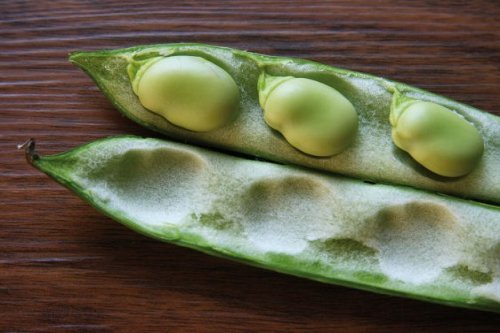
However, another way is to do this by dropping the podded beans into boiling water for a few minutes and then removing the skins. Now you can boil them in a little salted water testing them regularly to see if they are tender or not.
I like boiling broad beans, and then frying up a little chopped onion, garlic and bacon together until golden brown. Stir through your boiled broad beans and serve. You can also serve them with a little melted butter and seasoning to taste.
Of course, you can also dry broad beans and then use them in soups and stews during the winter. Again, rub off the skins of your winter dried beans to make them more tender.
Here's a Broad Bean Salad Recipe:
1 Cup cucumber, diced
1 Cup carrot, diced
2 teaspoons chives, chopped
1/2 cup French dressing
black pepper
Combine ingredients. Add pepper to taste. Serve.
Did you find this page helpful?
Sharing is a way of saying, "Thanks!"
Follow Us and Keep Up to Date
You can Add your Own Comments and Pages on Broad Beans here!
We have lots of pages where you can contribute to throughout this homesteading website. We love hearing from our readers, and hope you will be one of those we hear from too. Look around our homesteading website. If you have any comments, recipes of your own, or questions regarding growing broad beans, please add them by using this submission page below. We would love to have your contributions!
Leave a Comment
Do you have anything that you would like to add after reading this page? We would love to hear your thoughts. If you can add additional information to what has been written here you will be adding value to the website! No need to have any special skills - just type and submit. We will do the rest!
Other Comments
Click below to see comments from other visitors to this page...
planting technique for large scale plantings of Fava beans for purpose of green manure crop 
With regards to a large scale planting of Fava Beans, does one use a seeder or do they just scatter the seed, harrow and board for an en masse seeding …
Broad Beans Flowers but No Beans
I have been waiting for my broad beans to grow for months now, the flowers have been there for so long now I don't believe I will get any broad beans. …
Thank-you for this detailed info - my 1st time with Favas! Not rated yet
I will be growing my first favas this year in Zone 5b. I looked at many packages and was concerned I was already too late - the package said to plant in …
Broad Bean leaf rust Not rated yet
I have rust on my Broad Bean plants this year which suddenly appeared this month and is the first time it has been a problem.
I think it is because …
Don't miss out on our latest news and articles. Sign up for our free monthly e-zine!
NAVIGATION COLUMN
Find us on Google+Country Shopping
Country StoreFree Stuff
Free MagazinesHomesteading Blogs
Country Living Blog Gypsy's WanderingsCountry Living
Country Home Country Living Country Crafts Country HolidaysCountry Real EstateCraft ForumPicnics CampingSelf-Sufficiency
Self-Sufficient Living Organic Gardening Do It Yourself Easy RecipesHomesteading
Homesteading Today Homesteading Q & A Homestead Animals Urban Homesteading Homestead DirectoryGoing Green
Green LivingFarms Around the World
South Africa United Kingdom United States Canada Central America Australia New Zealand Europe Farm Photos Farming Articles True Farming Stories Farms for Sale Organic Farm ProduceMiscellaneous
Guest Book Search Site Survey Advertise with Us


OTHER SECTIONS OF INTEREST
 Natural
Pesticides
Natural
Pesticides Grow
Vegetables
Grow
Vegetables Square
Foot Gardening
Square
Foot Gardening Moon
Planting
Moon
Planting How to
Make Compost
How to
Make Compost
Organic Gardening

Click Here
New! Comments
Do you have something of value to add? Leave me a comment in the box below.