Growing Asparagus from Seed, Crowns, Health Benefits and How to Cook
 f
f
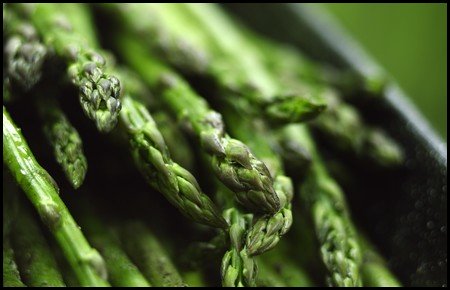
Harvested Asparagus Spears
With good soil preparation and care, you can harvest asparagus for more than 20 years. One family I knew was harvesting from the same plants 50 years on! Asparagus growing isn't difficult, but you do have to be patient.
Asparagus is a perennial and it does take a while before you can harvest your first crop and really you won't have a good harvest until your plants have been growing for at least 4-5 years. This is why I say you have to be patient, but in the end, it is worth the wait!
So how many do you need to plant? For each family member plant 10 plants. Ideally, no cutting should take place until the 3rd spring. Plants will take 5 years before they are in full production. If you have set out your asparagus beds well from the beginning, as mentioned earlier, you will be able to harvest for many years from the same plants.
Asparagus and Planting by the Moon
Know when to plant vegetables, as well as during the month for planting by the moon.
For planting by the moon for asparagus, planting and sowing is done during the full moon phase.
Growing Asparagus from Seed
Both asparagus seeds and crowns can be planted in late winter or early spring when the frosts have finished.Asparagus seed is highly viable and germinates easily under the right conditions. Germinate the seeds first in a seedling tray in a warm and protected area like a hothouse or a cold-frame, or sow in open ground during spring, after the frosts have gone.
Keep the seedlings moist and be patient as they may take some time to shoot. When growing asparagus from seed in this way, they can remain where they are for the first 2 years before they are transplanted out as they will not produce any spears before then.
In order to speed the process of germination soak the seeds in water for 24 hours before planting.
If you do plant asparagus seeds, during the 18 months to 2 year growth period discard those plants which produce berries, because shoots of female plants are slender and tough.
If you sow seed in spring, plants can be moved to the production beds a year from the following fall.
Growing Asparagus by Crowns
Several high quality strains of asparagus are available from local nurseries and from mail order specialists. You can buy one or two year old plants. But buy those that plants only if they are fresh, with crowns showing signs of life and with almost pencil-thick roots which are crisp and brittle, not limp and rubbery.It is sometimes difficult to buy fresh, top quality asparagus plants, and so therefore you may wish to buy asparagus seed to grow plants in a seed bed before moving them to the production beds.
When you buy asparagus crowns that are already 2 years old it will give you a crop a lot faster. Prepare the soil but digging a trench in the bed to a depth of 30 cm and place the crowns 30-45 cm apart.
Surround your asparagus crowns with well-rotted manure and a good, light soil allowing for the shoots to push through easily. The crowns should be buried about 7.5 - 12 cm under the soil. However, make sure that your soil is warm and that you don't over water the soil so that the crowns rot.
Cover the asparagus crowns after you have set them out with the thick roots spread horizontally around each crown. Then cover them with remaining fill soil.
Leave 30-45 cm between plants and ideally 1.2 meters between rows, although if space is a problem you can space the rows closer together without too much of a problem at 60 cm.
Water well while growing asparagus and as the plants grow, more manure and soil should be added to the plants until the soil is level with the surrounding ground.
By continuing to hill the soil around the asparagus plants in the early spring the shoots will have to push through about 15 cm of soil. At the time of harvest the stems will be largely white rather than the green stems that will emerge if you don't hill the soil.
Best Growing Conditions - Climate and Soil
They love free draining, light soil that has had generous quantities of organic matter added before planting. The soil should have a pH value of 6.5 - 7. Any higher than this and you should add lime to your soil to get the pH level right. They like an open and sunny site which is preferably north-facing and protected from strong winds.
For each family member plant 10 plants. Ideally, no cutting should take place until the 3rd spring. Plants will take 5 years before they are in full production. If you have set out your beds well from the beginning, as mentioned earlier, you will be able to harvest asparagus for 20 years or more from the same plants.
Cultivating Asparagus
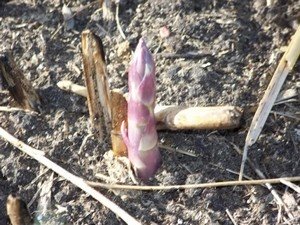 For the first two years of your plants'
lives there won't be too much foliage to worry about. However, when it
does start appearing, don't cut it as this will affect abundance of
your asparagus
crop. Cutting the foliage can only be done in the winter when the plant
is resting.
For the first two years of your plants'
lives there won't be too much foliage to worry about. However, when it
does start appearing, don't cut it as this will affect abundance of
your asparagus
crop. Cutting the foliage can only be done in the winter when the plant
is resting.Continue to keep the asparagus beds moist making sure that they never dry out. Any weeds that appear should be removed by hand so as not to damage the shoots in any way.
Every year, during spring, when growing asparagus it should be fed with a good fertilizer such as seaweed, and in the autumn the soil should be mulched with a good layer of well-rotted manure which should be watered in well.
During autumn or winter when the foliage has turned yellow it can be cut down to within 3 inches of the ground. Make sure that the foliage is cut down before the berries start dropping to the ground. If they have already done so these should be removed by hand to prevent them from germinating.
Weekly raking will destroy germinating weed seeds. Plan to fertilize asparagus beds in late spring, after cutting stops, and again in midsummer, with a high nitrogen fertilizer like seaweed.
If you are able, in early summer, always apply a deep mulch of barnyard manure, rake into broad mounds over the rows after the tops have been cut down in the fall.
Growing Asparagus with Companion Plants
- Basil
- Chives
- Marjoram
- Parsley
- Tomatoes
When to Harvest Asparagus
Asparagus should not be harvested in the first season after planting out the crowns. In the second spring they should only be picked for 3-4 weeks after the spears first appear, and then very sparingly. In fact it would be best if you only picked one spear off each crown during this season.
When the plants are 4 years old you can extend the harvesting season to 4 weeks of the year.
When the plants have reached maturity in year 5, and thereafter, the spears can be picked for 6-8 weeks during the season.
Always stop cutting in late spring so as to allow the plants to rest. The new asparagus spears which appear after the end of the cutting season in spring are allowed to develop fully, the stems being cut off at ground level and removed in late autumn after they have died back.
Some growers gradually remove all the female plants and replace them with male plants to achieve bigger yields.
Conclusion on Growing Asparagus
Questions and Answers for Asparagus
A. When the weather turns hot, the growing point expands rapidly and the bracts (modified green leaves) are spread by the early development of the stems and ferns. The asparagus is safe to eat because only the appearance is affected.
Q. Early spring freezes caused the asparagus spears in my garden to turn brown and wither. Are they safe to eat?
A. Frozen tips should be picked and thrown away. These spears, although not poisonous, are off-flavor.
Q. Can I start asparagus from seed?
A. Yes. You can grow your own asparagus plants by planting seeds 1/2 inch deep and 2 inches apart in the row. Start the seeds in the spring when the soil temperatures have reached 60ºF. Dig the plants the following spring, before growth begins and transplant them to the permanent bed as soon as the garden can be worked. Growing your own plants delays establishment of your bed an additional year, but it ensures that you are starting with freshly dug crowns that have not lost vigor by being dug, stored and shipped. Also, variety selection is usually much greater when shopping for seeds rather than crowns.
Q. What causes crooked spears?
Health Benefits of Asparagus
Today, asparagus is considered a superfood, but for thousands of years, our ancestors already knew about the health benefits of this little plant.Loaded with Vitamins C and B6, folic acid, rutin, and potassium for good heart function, asparagus plants also contain asparagine which is very important for both bladder and prostate health and pectin which helps lower cholesterol levels. Because it is high in iron, it is also good food for those suffering from anemia.
How to Cook Asparagus
This is a delicate vegetable, especially the green shoots, that are best either steamed, lightly boiled in salted water, or roasted. Any way you do them make sure that they are still crisp, rather than limp and soggy.In preparing them, if they are green, you usually do not have to do anything else to them, other than rinsing and placing them in the steamer. However, the white spears are thicker and tougher, and sometimes can be woody, if you don't trim the ends.
The best way to do this is to hold the asparagus spear in one hand and just grab the bottom of the end and snap back. Wherever it breaks, will usually be the place where it is the most tender.
Place the spears above the break into your pots, and chop up the snapped off ends and freeze for later use in soups or stews.
You can Add your Own Comments and Pages on Growing Asparagus!
We have lots of pages where you can contribute to throughout this homesteading website. We love hearing from our readers, and hope you will be one of those we hear from too. Look around our homesteading website. If you have any comments, additional information or questions how to grow asparagus feel free to write to us below.
Leave a Comment
Do you have anything that you would like to add after reading this page? We would love to hear your thoughts. If you can add additional information to what has been written here you will be adding value to the website! No need to have any special skills - just type and submit. We will do the rest!
Other Comments
Click below to see comments from other visitors to this page...
New asparagus growers Not rated yet
We just planted our first crop of asparagus a month ago and we are already getting asparagus heads showing.
So, shall I just leave them alone and let …
asparagus problems Not rated yet
We have problems with our asparagus. Our asparagus is tall and ferny it has been planted for 4 years and never changed looks.
This year we planted …
Don't miss out on our latest news and articles. Sign up for our free monthly e-zine!


OTHER SECTIONS OF INTEREST
 Natural
Pesticides
Natural
Pesticides Garden
Pests
Garden
Pests Grow
Vegetables
Grow
Vegetables Companion
Planting
Companion
Planting How to
Make Compost
How to
Make Compost
Moon Planting
New! Comments
Do you have something of value to add? Leave me a comment in the box below.