Secrets on How to Make Compost in 14 Days
Not everyone is successful. Not that composting is difficult to make, but you have to get the right ingredients in the right balance. That is the key to success.
There are 6 essential compost ingredients needed:
1) Heat
2) Moisture
3) The correct carbon to nitrogen ratio in the organic material
4) Getting air to the compost heap
5) Insects and micro-organisms
6) Time!
What is Compost?
Compost is the breaking down of organic material such as grass clippings, leaves, flowers, vegetable and fruit peelings and stems, roots and hedge trimmings.Once the organic material has broken down you end up with a rich, friable material that can be added back into the soil to add nutrients and goodness that is needed by plants for good growth and development.
Why Compost?
More importantly, composting diverts your green waste back into the garden instead of ending up in a landfill, which also helps to reduce the production of damaging greenhouses gases and allows as to reduce our ecological footprint in a small way.With half of what we throw away as domestic waste coming from kitchen waste and our gardens, it really does pay to try and recycle this waste, make compost and put it back into your soil. Therefore it is good to know how to make compost properly.
People sometimes have problems putting a compost heap together, they really don't have a clue on how to make compost and muddle along and become disappointed with the end result. They choose too much of one material, and the compost heap either doesn't break down as quick as it should, or they end up with a smelly mess.
Follow our simple instructions on how to compost, what and what not to put in your compost heap to take the stress out of compost making and get some composting know how. We will look at what should go into a compost heap so that it doesn't end up smelly and it does break down into friable compost.
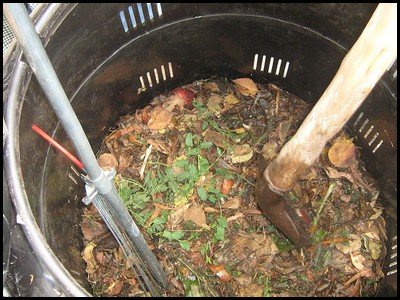
Making Compost In a Compost Bin
How to Make Compost and Looking after the Compost Heap
1) How to Make Compost - Getting the Right Heat and Temperature
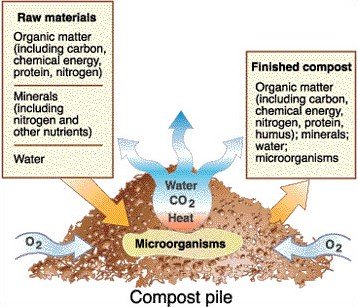
When suitable material is collected in a loose heap, naturally occurring micro-organisms such as bacteria, fungi and algae start to feed on the softer, more succulent ingredients in the composting process. At this stage, the heap should heat up to between 40 - 60°C. This heat speeds the rate of breakdown and can kill diseases and weed seeds. It should also be too hot for cockroaches and flies to breed.
2) How to Make Compost - Correct Moisture Content
Your compost heap should be moist, but never soggy. When it is soggy it will become smelly. This is when you need to balance it out a bit by adding either dry lawn clippings, shredded paper, sawdust or leaves to your compost when there is too much moisture.
Moisture – should be between 40 and 60%. Take a handful of the composting material from 15–20 cm deep into the heap/mound of composting material, and squeeze it. It should be about as moist as a moderately squeezed wet sponge. If it is too dry, add water to the heap. If it is too wet you may need to cover the heap with plastic, or turn it over regularly to allow for more evaporation to occur.
Once tender material is consumed, the rate of activity slows as the organisms work on tougher material. As the heap cools, worms, centipedes and beetles move in to help. By the end of the composting process, most of the ingredients have been broken down, mixed together and rebuilt into a balanced soil food.
3) How to Make Compost - Ingredients for the Right Carbon to Nitrogen Ratio
Most materials for composting do not meet the ideal 25:1 ratio, so different materials can be mixed to achieve the ratio required.
In general, the coarse, dried out “brown” material contains little nitrogen but is high in carbon. “Green” materials such as lawn clippings, vegetable scraps and manure contain high levels of nitrogen. Brown lawn clippings from a dry lawn will have less nitrogen than lush, green clippings. Clippings from lawns that have been extensively fertilized will have an even higher nitrogen content.
The correct blending of carbon and nitrogen helps ensure composting temperatures remain high long enough for the process to work efficiently.
Given a steady diet of around 25:1, micro-organisms can decompose compost rapidly. When the C:N ratio is too high, insufficient nitrogen slows decomposition. When the ratio is low, too much nitrogen leads to odor problems.
Blending materials to achieve a good C:N ratio is important to home composting. If you are composting high nitrogen materials such as lawn clippings, they should be blended with a high carbon material such as chopped leaves or mulched branches and twigs.
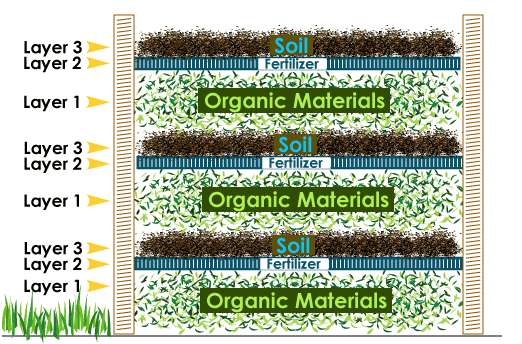
When you add material to your compost bin make sure that you have a balance between wet and dry, nitrogen-rich materials such as your fruit peelings, lawn clippings and then your carbon-rich materials such as your dry leaves, sawdust, paper, straw etc.
Try and add this all in layers, of 5 - 10 cm deep. I am not often able to layer things as I would like, just because of what I throw into the compost bin at the time, however, I do watch it and if it becomes too dry I add some more kitchen scraps, and if too wet, I add more paper etc.
It also helps to add a thin layer of soil to your layers, as well as adding oxygen to it by turning the top layers regularly.
4) How to Make Compost - Getting Oxygen to the Compost
Getting enough air to your compost pile is very important. Open pockets not only open up the pile to air which helps in the decompostion, but it also creates the homes for the insects and microorganisms so necessary to help break down the material even further.
Keep turning your compost heap over every week to get air to it. You can do this with a garden fork allowing the vegetation that is lying on the bottom to enjoy the heat in the middle too.
If your compost pile includes a lot of lawn cuttings, which are high in nitrogen, then you probably won't have to worry about add an activator to get your pile to start decomposing.
If you think your compost heap could do with a little help, pop into your local garden center and pick up a commercial activator. This will aid in getting your compost heap jump-started again and the composting process back into action.
Otherwise, a homemade compost activator is using urine on it from time to time or else add a few bunches of nettles to the heap or some comfrey leaves.
A compost heap will mature
quicker if
it is at least one cubic meter.

5) How to Make Compost using Insects
You want to encourage mites, worms, springtails, wood lice etc. In addition to insects and worms, successful composting also needs bacteria and fungi.
6) How to Make Compost over Time
How to Make Compost in 3-4 Months
2. Place a layer of vegetable matter at the base of your compost pile to a depth of about 6 inches. Make sure that you have the right mixture of nitrogen to carbon.
3. Spread a layer of animal manure on top to a depth of about 3 inches.
4. Pile another layer of the materials in the same way and repeat until the compost heap reaches about 4 feet.
5. Water the compost heap so that it is moist, but not soggy. Water regularly, particularly if the weather is hot.
6. Turn over the heap with a fork after 3 weeks, and then again after 5 weeks.
7. Your compost should be ready within 3-4 months.
How to Make Compost in 2-3 Weeks
2. Mix equal parts of vegetation with equal parts of fresh farmyard manure.
3. Pile the mixture into a heap measuring 3ft × 3ft × 3ft.
4. Cover the heap with banana leaves or old burlap sacks.
5. By the third or fourth day, the inside of the heap should be heating up quite nicely. If you find that the pile is not heating up mix more manure into it.
6. On the same day turn the compost heap so that the material from the center is now on the outside.
7. Turn the heap every two days after that.
8. In 14 - 18 days, the compost should be ready for use.
Know How to Make Compost and WHAT Ingredients to Add to your Compost Heap
To aid your compost heap start off making sure that whatever you put into your heap is as small as possible. One reader send us an article about how she makes compost using her juicer.
Hair in the Compost Pile
Vegetable Matter and Kitchen Scraps in the Compost Pile
 I also put in all the grass
clippings,
leaves and vegetable peelings, skins and scraps from my kitchen. Tea
and coffee grounds are also put in, including my used nettle
tea bags.
I also put in all the grass
clippings,
leaves and vegetable peelings, skins and scraps from my kitchen. Tea
and coffee grounds are also put in, including my used nettle
tea bags.
Paper is torn up and added to the bin, along with any animal farmyard manure, weeds, straw, nut shells, stale bread and olive pips. Most nut shells can be added, but stay away from walnut shells.
Add egg shells from eggs that haven't been cooked and any seaweed that has been washed up on the beach.
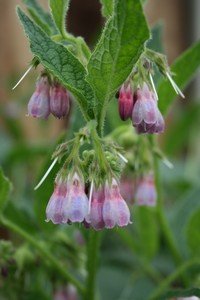
Chop up a couple leaves of comfrey, yarrow including the flowers, valerian, chamomile with the flowers and nettle leaves are all very good additions.
Comfrey for Composting
Young plants break down a lot quicker than plants that are woody or dry as they have a higher water content and a higher sugar content.
The smaller the pieces placed into the compost heap the better. This provides a greater surface area for the insects and bugs to work on. If large pieces are added to the heap then the break down process will be very slow. Therefore any large branches and plants should be cut up and made smaller.
Avoid anything with thorns.
Dry Matter in the Compost Pile
Finally, if you have a fireplace or woodstove, this is the place to add your wood fire ash.
Farmyard Manure in the Compost Pile
One should wait a minimum of six weeks to prevent problems such as burning of leaves and roots from the presence of high levels of ammonium ions in the fresh manure. This is particularly important when composting with chicken manure, as it is very strong.
Free or Cheap Resources for Composting Material
How to Make Compost and What Ingredients NOT to add to your Compost Heap
Avoid Fat and Meat Scraps
Avoid Weeds and Diseased Plants
Avoid adding any diseased plants to your compost heap. Rather put these in the rubbish bin or better still, burn them.
Diseased plant material should not be used in compost as it may contaminate new areas when the compost is spread around at a later date.
Avoid Dead Animal Products
Avoid Pet Poo
Avoid anything that is Non-Biodegradable
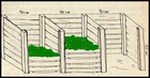
Make a Cheap Compost Bin
Take a roll of tightly meshed chicken wire and tie 4, 6 or 8 posts sharpened at one end to the wire. Place them at 9 inch intervals. Push the sharpened ends into the ground. Place a few small rocks on the ground to form aeration.
Compost likes heat to break down all the material, so cut a piece of old carpet, the same size as the diameter of the homemade compost bin and place it on the top after you have layered the chicken wire round with vegetation and farmyard manure.
Placing the carpet on the top will prevent any goodness being leached out of the composter when it rains.
There is more information on how to make a wooden compost bin.
How to Make Compost and Compost Troubleshooting
Getting the right proportion of moisture and the right combination of ingredients in your compost may take a little practice, but most problems can usually be overcome. Find the solutions here to your problem.
Composting Problem: My Compost Heap is too WetSolution: Add sawdust or shredded newspaper to help absorb moisture, and turn regularly
Composting Problem: My Compost Heap is too DrySolution: Water lightly.
Composting Problem: My Compost Heap is Not Heating Up
Solution: Add a source of nitrogen, such as animal manure or blood and bone meal or vegetable scraps.
Composting Problem: My Compost Heap is Too Hot
Solution: If the mixture goes grey and smokes, turn and spread it out to cool the compost down.
Composting Problem: My Compost Heap is Smelly
Solution: All compost releases some smell when it is turned. Reduce smell by keeping the compost damp but not wet.
Composting Solution: My Compost Heap has Flies and Cockroaches
Solution: Fully enclose the compost. Make sure the compost is hot in the center and turn regularly to ‘cook’ fly and cockroach eggs. Add some ducks to your homestead or garden. They are great fly catchers!
How to Make Compost - Now that I have my Compost how do I use it?
Dig the compost into flower and vegetable gardens to a depth of about 5cm. It can be applied to the surface of garden beds as mulch or used as top dressing for lawns. When using compost on the garden, take care to keep it away from roots and stems to avoid burning.No single chemical fertilizer or animal manure by itself can match the goodness of nutrient-rich, homemade compost. It boosts nutrient levels in the soil, helps control diseases in garden wastes, saves trips to the tip and backyard burning, and reduces garbage output significantly. Healthy, chemical-free flowers, fruit and vegetables are a bonus.
Even if you can't use the compost on your own garden, it will almost certainly find a welcome home with a ‘green-thumbed’ neighbor.
How to Make Compost: Additional Information and Resources
| Countryfarm Lifestyles Tip on How
to Make Compost Urine is an
excellent source of nitrogen, including human urine, and
therefore worth saving as it a free source and very useful
for
activating your compost heap.
|
For those of you who are interested in knowing how to make compost and what materials contain which of the three necessary elements; nitrogen, potash and phosphates, you can see a quick list below:
How to Make Compost by Adding Nitrogen:
- urine
- raw bone meal
- feathers
- hair
- tea and coffee grounds
How to make Compost by Adding Potash: - hay
- wood ash
- wool waste
- banana waste
- rock dust
How to Make Compost by Adding Phosphate: - fish
- hoof and horn meal
- sugar waste
When you are making compost, of course you will need a compost bin. We have some information on how to make a compost bin, along with some plans, including one set of plans to make a log compost bin.
One subject we didn't touch on here is worm farming. With worm farming you can make good compost fairly quickly which will give you an added dimension to your composting know how and learning how to make compost.
Video on How to Make Compost
You can Add your own Comments, Tips and Ideas on How to Make Compost Here!
We have lots of pages where you can contribute to throughout this homesteading website. We love hearing from our readers, and hope you will be one of those we hear from too. Look around our homesteading website. If you have some comments, tips, or ideas on how to make compost of your own, please submit them. All you need to do is type and submit. We will do the rest!
Leave a Comment
Do you have anything that you would like to add after reading this page? We would love to hear your thoughts. If you can add additional information to what has been written here you will be adding value to the website! No need to have any special skills - just type and submit. We will do the rest!
Other Comments
Click below to see comments from other visitors to this page...
Calculating Carbon : Nitrogen Ratios for Composting 
What would be the balance just using horse manure and grass clippings?
****
Jackie, you ask about working out the calculations of carbon to …
Using Juicers for Composting
I am a firm believer in eating healthy, and growing organic foods. Although, I am not a pure vegetarian; because on occasions I still eat chicken and turkey, …
Where to place composting bins Not rated yet
Not a comment but a question. I have only raised beds in my garden and having purchased a composting bin is it possible to locate this on a tarmacked area …
Don't miss out on our latest news and articles. Sign up for our free monthly e-zine!
NAVIGATION COLUMN
Find us on Google+Country Shopping
Country StoreFree Stuff
Free MagazinesHomesteading Blogs
Country Living Blog Gypsy's WanderingsCountry Living
Country Home Country Living Country Crafts Country Holidays Picnics CampingSelf-Sufficiency
Self-Sufficient Living Organic Gardening Do It Yourself Easy RecipesHomesteading
Homesteading Today Homesteading Q & A Homestead Animals Urban Homesteading Homestead DirectoryGoing Green
Green LivingFarms Around the World
South Africa United Kingdom United States Canada Central America Australia New Zealand Europe Farm Photos Farming Articles True Farming Stories Farms for Sale Organic Farm ProduceMiscellaneous
Guest Book Search Site Survey Advertise with Us


OTHER SECTIONS OF INTEREST
 Making
a Wooden Compost Bin
Making
a Wooden Compost Bin FAQ on
Manure
FAQ on
Manure Worm
Farming
Worm
Farming Grow
Vegetables
Grow
Vegetables Ecological
Footprint
Ecological
Footprint
Self Sufficient Living
New! Comments
Do you have something of value to add? Leave me a comment in the box below.