How to Make Pickles - 6
Easy Steps
to Making Pickled Onions
Learn how to make pickles following our step-by-step pickling
instructions with pictures on how to make pickled onions.Pickling consists of
preserving fruits and vegetables in
vinegar or
brine. Each of these liquids acts as a preservative, so that the
receptacles, or containers, for the food do not have to be sealed
air-tight, nor does the preserved food require much care in order to
have it keep perfectly.
The effect of the pickling liquids on both fruits and vegetables in your pickle recipes is very similar. The salt in the brine or the vinegar hardens the cellulose of the foods to such an extent that they are impervious to the action of bacteria. While this permits the foods to keep well, it also makes them difficult to digest, a fact that must be remembered when pickled foods are included in the diet.
How to Make Pickles with our Easy Pickling Instructions
How to pickle is easy and even the pickle recipes below are not difficult to make. In fact it is easier than following jam recipes or jelly recipes.
After the fruit or vegetable is cleaned and prepared in the way desired, it is merely a matter of placing the food in sterilized pickling jars or crocks, pouring the hot preserving liquid over it, allowing it to cool, and then storing it. In some cases the food is cooked, and in others it is not. As a rule, spices of some kind or other are added, both to aid in preserving and to impart flavor.
Practically all large
fruits and many
vegetables can be pickled, as is
shown in the pickle recipes that follow. Foods preserved by pickling
are known
as either pickles
or relishes.
Follow our step-by-step images and pickling instructions for pickled onions.
PICKLE RECIPES for PICKLED ONIONS
Pickled onions are well liked by many. For pickling purposes, medium small onions of uniform size are most suitable. Owing to their nature, onions cannot be pickled so quickly as some of the vegetables mentioned, but, otherwise, the work is done in practically the same way.You will need the following for your pickled onion recipe:
4 qt. onions
2 qt. spiced vinegar
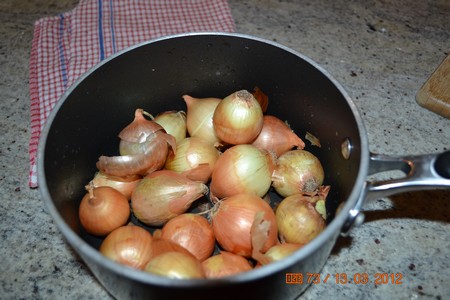
Pickling Onions in a Pot
A very helpful hint that we can pass on, that will save many a tear, is some advice on peeling your pickled onions. I think just thinking about it, puts people off even attempting to pickle onions. We have a solution.
How to Make Pickles - Step 1.
Boil some water and place your onions with the skins on, into the bowl. Wait until the water is warm to the touch and test to see if you can easily rub off the skins from the onions. If not, leave the onions in the water for about 20 minutes more.Don't leave the onions in the hot water too long as you don't want them to go soft.
By that time you should have no trouble removing the skins.
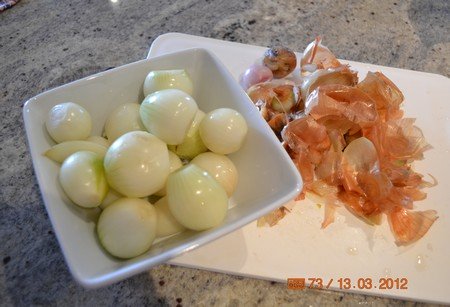
Pickling Onions with no Tears
How to Make Pickles Step 2.
Over the onions pour a brine made by adding 2 cupfuls of salt to each gallon of water. Allow them to stand in this brine for 3 days, changing the brine once during this time.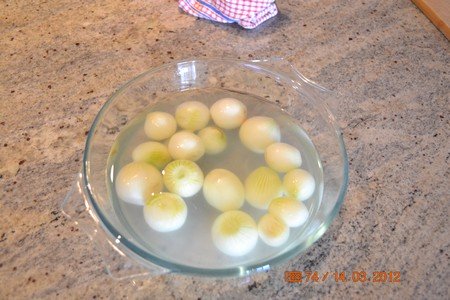
Pickled Onions in Brine
How to Make Pickles Step 3.
Remove the onions from the brine, and freshen in ice-cold water for 2 hours.How to Make Pickles Step 4.
Now take a sterilized jar and lid and place your onions into the jar.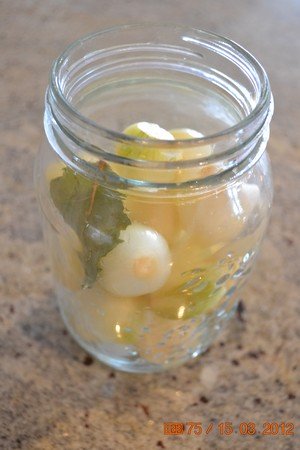
Pickled Onions in a Jar
How to Make Pickles Step 5.
On the stove heat up your malt vinegar with some bay leaves, a 1/4 teaspoon pepper corns, 1/4 teaspoon whole mustard seeds, and 1/4 teaspoon whole coriander seeds.Do not boil. Remove from heat.
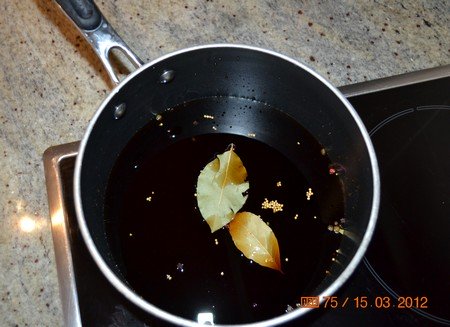
Pickling Spices
How to Make Pickles Step 6.
Pour spiced vinegar over the onions, and seal. Do not use before a month has passed.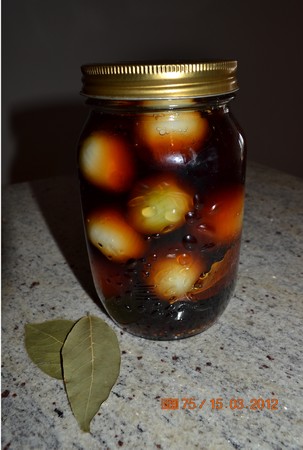
Now you know how to make pickled onions!
Would you like some more pickle recipes?
RECOMMENDED BOOKS ON MAKING PICKLES
You can Share your
Pickling Experiences
We have lots of pages where you can contribute to throughout this homesteading website. We love hearing from our readers, and hope you will be one of those we hear from too. Look around our homesteading website. If you have something to add, or ask a question, how about sharing them with us below? All you have to do is type! We will do the rest.
Leave a Comment
Do you have anything that you would like to add after reading this page? We would love to hear your thoughts. If you can add additional information to what has been written here you will be adding value to the website! No need to have any special skills - just type and submit. We will do the rest!
Did you find this page helpful?
Sharing is a way of saying, "Thanks!"
Follow Us and Keep Up to Date
Don't miss out on our latest news and articles. Sign up for our free monthly e-zine!
NAVIGATION COLUMN
Find us on Google+Country Shopping
Country StoreFree Stuff
Free MagazinesHomesteading Blogs
Country Living Blog Gypsy's WanderingsCountry Living
Country Home Country Living Country Crafts Country Holidays Picnics CampingSelf-Sufficiency
Self-Sufficient Living Organic Gardening Do It Yourself Easy RecipesHomesteading
Homesteading Today Homesteading Q & A Homestead Animals Urban Homesteading Homestead DirectoryGoing Green
Green LivingFarms Around the World
South Africa United Kingdom United States Canada Central America Australia New Zealand Europe Farm Photos Farming Articles True Farming Stories Farms for Sale Organic Farm ProduceMiscellaneous
Guest Book Search Site Survey Advertise with Us


OTHER SECTIONS OF INTEREST
 Relish Recipes
 Home Canning
 Canning Recipes
 Country
Recipes
Country
Recipes
New! Comments
Do you have something of value to add? Leave me a comment in the box below.