How to Raise Chickens - All about Raising Organic, Backyard Chickens
Raising organic poultry can be very satisfying, and you don't have to live on a farm to be able to collect your own eggs every day - you can raise backyard chickens too. As long as your council allows the keeping of poultry, you can easily set up a chicken coop in your backyard; thus backyard chickens Farming organic chickens in your own backyard, is very satisfying. Just remember, most councils will not allow you to keep a rooster, only hens, because of the racket they can make and waking up your neighbors, which is fine, because you do not need a rooster for your hens to lay eggs.
However, before you decide on what chicken breeds you want to keep, you should be looking at why you want to keep them. Are you raising chickens for meat production, egg production or just because you want to have a couple of fowls scratching around in your garden keeping the slugs and snail population under control? Based on your needs, you will then be able to identify what chicken breeds you should keep.
However, remember too that if you want to learn how to raise chickens that are free range in an urban garden rather go for bantam chickens, particularly a breed such as Pekins as they do very little damage by comparison to other breeds that are far better suited to chicken coops.
However, raising organic chickens really is the beginning of sustainable living; chickens will be able to eat your table scraps and vegetable peelings, in addition to their grains. They will happily lay eggs for your personal consumption, and best of all, will provide you with some of the best type of manure for you to add to your compost heap which, in turn, will benefit your garden and vegetables no end.
How to Raise Organic Chickens and Basic Care
So, how to raise chickens successfully? Chickens like routine, and should be let out and put away at a set time every day.
They should be fed little and often.
Housing should be kept very clean, and all manure should be scraped off the perches and floor of the coop daily.
Fresh water should be given daily, and chickens looked over to see any immediate apparent illnesses.
There is no need to keeping a cock bird if you are raising chickens for eggs. Sometimes, they are more trouble than they are worth.
How to Raise Chickens and Choosing the Right Chicken Breeds for You
How to Raise Bantam Chickens
How to Raise Chickens for Eggs
How to raise chickens for eggs? These are birds that are light in body-weight and as a result often take off to roost in trees and tend towards flightiness in general. Therefore, if you want to keep egg-layers, they should really be kept in covered runs. Alternatively, if you want to let them free-range, you will have to clip one wing.How to Raise Chickens for Meat
How to raise chickens for meat? Table breeds are heavier and therefore less flighty than egg-layers. They are also more docile and placid in nature. There are also many dual-purpose birds which are both excellent table birds and good layers. These are discussed under Chicken Breeds. However, if you are going to raise table birds, never name your chickens unless you want recrimination and tears from the kids who refuse to eat "Rusty" or "Speckles" minus its feathers while gracing the plate!However, if you end up with too many roosters, don't despair, as you can caponize chickens, making your roosters good as surrogate mothers for hatching eggs, and also better meat birds.
How to Raise Chickens - How Many Chickens Do you Need?
How to raise chickens for your family's needs? For those of you who are raising organic chickens just for eggs, then 6 good layers will happily keep a family of 4 in eggs, all year around. Beware however, that at certain times of year there will be times when egg production will decrease. This happens when the chickens loose their feathers during moulting in late summer, early autumn, and in winter when there are reduced daylight hours.
How to Raise Chickens and Buying your Chicks
Buying your chickens will basically come down to 2 things; how much money do you have, and how much time can you afford to wait before your chickens start to produce eggs or will be slaughtered for their meat? How to raise chickens in the space that you have?
The cheapest option is, without a doubt, buying day-old chicks. However, although they are cheap, there are some issues here that need to be discussed. First of all, buying day-old chicks often comes with a high mortality rate. If you haven't lost some on-route to delivery, you will often loose some more within the next couple of days.
To prevent any further deaths you will have to invest in an artificial brooder, or find a foster mother for them to keep them warm.
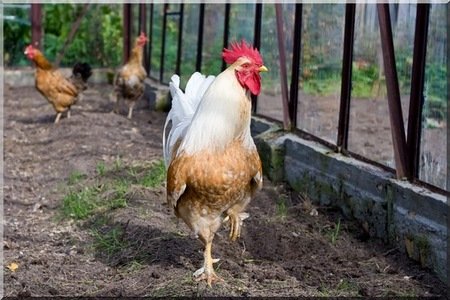

Secondly, very few chicken breeds can be sexed at that age. As a result, if you are after egg-layers, you really don't want to end up with a lot of useless cock birds. And then what do you do with them once you find that about 40 - 60% of your stock are male? You will either have to cull them, or separate them off and sell them at a later stage. However, you will have to off-set that against the cost of their food, care and housing.
Lastly, when you buy day-old chicks, you will have to feed, care and house them for at least 8 months or so, before they start to lay.
For those of you who are raising chickens for egg laying, it make more sense to buy pullets. A pullet is a female that is at least 20 weeks of age and less than 1 year old. Technically, she is capable of laying eggs within 4-6 weeks of purchase, which is significantly less than time then the 8 months you would need to wait if starting with day-old chicks.
The downside is of course in raising pullets is the cost of purchasing pullets. They are more expensive, but then they too have had to be fed, vaccinated and cared for, for the last 8 months.
At the end of the day, you will have to decide what is right for you, and your situation. However, the best time to buy, whether it be day-old chicks or pullets is in the spring. Your birds will be about a year old, and will be far happier coming to a new home with good weather and access to new grass shoots and lots of sunshine.
How to Raise Chickens and Chicken Coops
How to raise chickens happily means choosing good housing. Chicken coops can be simple homemade arks to chicken palaces and everything in between. Chicken coops can be bought or they can be made. We have a free chicken coop plan for you which is 8 feet by 8 feet. And another chicken house plan, courtesy of the Tennessee University. In the end, it really comes down to space factors, aesthetics and money.
Whatever chicken coop you choose it should give your chickens 5 things:
- 1) Adequate protection from the weather and predators such as foxes
- 2) A large enough coop to give them space, but not too large where they won't benefit from each other's warmth, especially in winter
- 3) The coop should be free from draughts but still has good ventilation
- 4) The coop is positioned so that the front of it faces the the rising sun but it's protected from the midday sun.
- 5) Part of the run should be shaded.
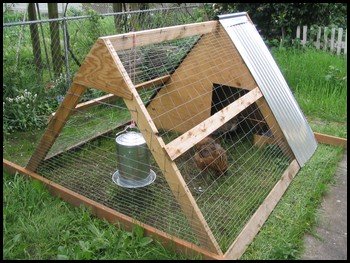
Picture courtesy of Van Tucky
If you are raising 12 chickens in a covered coop with an attached run then your coop should be 5 x 7 feet and at least 1/5 of wall space should be allocated to windows. If you are not going to provide any outdoor access, then you could only house 6 chickens in this space.
However, unless you keep your chicken production to small numbers, one coop will never be enough. If you are going to breed chickens, you will need extra space for mum and her chicks. Sometimes too, you will have a sick chicken that needs to be separated from the rest.
How to Raise Chickens: The Ark Chicken Coop for Backyard Chickens
How to raise chickens in the chicken ark is great for small backyards. The ideal type of housing is one which you can place directly over an area that you want to use in the future for vegetables and then move to another area at a latter date. These are known as movable arks and are ideal for a number of reasons.
When you have them in your veggie patch the chickens can scratch around in the dirt, eat the grass and insects and fertilize your soil at the same time, with very little effort from you. Once you feel that they have spent enough time there, you can move the ark into another position where the grass is better, and you can start all over again. You only have to dig over that area where the chickens have been, allow the manure and added compost to rot down, and once planted out, you will have the most amazing vegetables.
In moving your chickens around a lot you will minimize the chance of disease, they will always have access to fresh grass, and involves very little housework when cleaning out, as opposed to a permanently fixed hen house.
However, they still need to be cleaned and disinfected, and this should be done every 6 weeks.
How to Raise Chickens Fixed Hen Houses
How to raise chickens in fixed hen houses is more difficult. They are useful if you are keeping a large number of birds that will also have access to an outside run, or is used for intensive chicken farming for a small number of birds. However there are a number of things here too that need to be taken into consideration.
These chicken houses take a lot of time and effort to keep clean. All the perches, walls and floors have to be scraped removing the manure on a regular basis. Ventilation is an issue, and if not provided your chickens will end up with respiratory infections and other problems. The taller the walls, the better the air-flow, and in general, you should be able to stand upright in the chicken house. This also enables you to walk in without doubling over, and makes cleaning and egg-collecting a lot easier. My ideal chicken coop has the nesting boxes positioned whereby you can collect the eggs while standing outside the coop.
The floor of the hen house should be covered in a material that is not moldy or damp or dusty so that it causes any respiratory problems. The ideal coverings would be wheat or oat straw, non-toxic wood shavings or shredded paper. This further helps with insulation, absorbs any droppings and keeps the birds busy, as they will enjoy scratching through it. This should be replaced twice a year and the hen house should be thoroughly disinfected after it has been cleaned, preferably with a high-pressure steam cleaner.
How to Raise Chickens - Nesting Boxes
How to raise chickens for egg laying. For every 3 laying-hens there should be 1 nesting box 1 foot square, and 14 inches high. These should be placed just off the ground and lined with straw or hay. They will need to be cleaned out regularly; at least once a month, dusted for parasites, and any broken eggs should be removed immediately. This is very important as once a hen gets into the habit of eating eggs, it will be almost impossible to stop.
How to Raise Chickens - Perches
Perches should run the length of your hen house and be about 2 inches thick. However, if you are keeping bantams, then they should be 1 inch in thickness. If you are using wood, all perches should have the top edges rounded off, and the wood should be splinter-free. Each bird should be allocated 8 inches of roosting space. Never place the perches more than 2 feet off the ground for fear of injuring the birds, unless you are keeping a variety of bird that has long plumage.
How to Raise Chickens - Chicken Runs
19 gage wire with a 2 inch mesh is more than adequate for fencing in chickens. However, for egg-layers who are quite flighty, and to keep predators out, they should be built to 6 feet in height. At least a foot of wire should be buried underground to prevent foxes from digging underneath. In some countries now, due to bird flu, all chickens have to be fully fenced in, which means that the top of your run should also be covered with further wire mesh or netting.
The best way in dealing with fixed chicken houses is to have 2 runs attached to the sides of the house. While one is in use, the other is free. This is so that the ground can recover and the grass can regrow, and it also helps to cut back on parasites and diseases that occur through farming one lot of livestock on the same piece of land, year after year.
How to Raise Chickens and What do chickens Eat?
How to raise chickens successfully means knowing what they eat. Chickens have different nutritional needs at the different stages of their lives. Young chickens need more protein when they are young as opposed to when they are around 12 - 18 weeks when they no longer have a growth spurt and are growing more slowly.
However, despite the fact that chickens are foragers and will eat slugs and snails, insects, table scraps and the like, they also need protein for growth, tissue repair and to develop an immunity against diseases. They also need fats and carbohydrates for heat and energy, and a small amount of fiber aids in digestion.
Grow sunflowers for your chickens. They love the seeds when they are ready for harvest and improve the quality not just of egg production, but also the quality of the meat when eating.
Finally, a chicken needs vitamin supplements and minerals for optimal health, strong bones and good eggshell formation. Get more information on feeding chickens.
How to Raise Baby Chickens
When raising baby chickens for the first 48 hours they should have no food. After that, they should be fed a diet that is high in protein and minced boiled eggs are an ideal food for them. On the first day of feeding they will need to be fed every couple of hours. Baby chickens should be fed little and often, about 4-5 times a day at first.Stay away from kitchen scraps until they are much older, as they need the right protein levels at this stage to grow into healthy birds.
Go to Raising Baby Chicks for more details.
How to Raise Chickens on Commercial Feed
However, if you just feed them pellets they will soon get bored, just as you would get bored if you were given the same food day in and day out. Chickens love kitchen scraps and veggie greens, as we have already mentioned, and they also love eating corn.
Pellets and kitchen scraps are best given in the morning (a large handful each, per bird) and the corn in the afternoon. Wheat and maize are mixed in this feed in a ratio of 1:4 respectively. A small handful for each bird scattered on the ground will give the birds interest and exercise in foraging for it, rather than placing it in a feeder.
How to Raise Chickens and Feeding Grit and Oyster Shell
Oyster shell should only be given to the chickens once they start laying. If they are given the shell too early, they could end up with egg-binding issues. Grit on the other hand should be given from day one as this aids in their digestion. It can either be left in yard all day for the chickens to peck at when needed or sometimes, it is left as a thin layer in the nesting boxes for the fowls to access. Each bird will consume about 1 tablespoon of grit a month.How to Raise Chickens and Providing a good Water Supply
Learning how to raise chickens must include providing a good water supply. Your chickens are made up of 50% water, therefore it stands to reason that your chickens will need a constant supply of fresh water. Chickens also are unable to perspire, and in the heat you will see your chickens with their wings and beaks open trying to cool down. If your chickens don't have access to water in these conditions, they will die.Go to Feeding Chickens for more details and a complete guide to feeding adult and baby chickens.
HOW TO RAISE CHICKENS AND CHICKEN HEALTH CARE
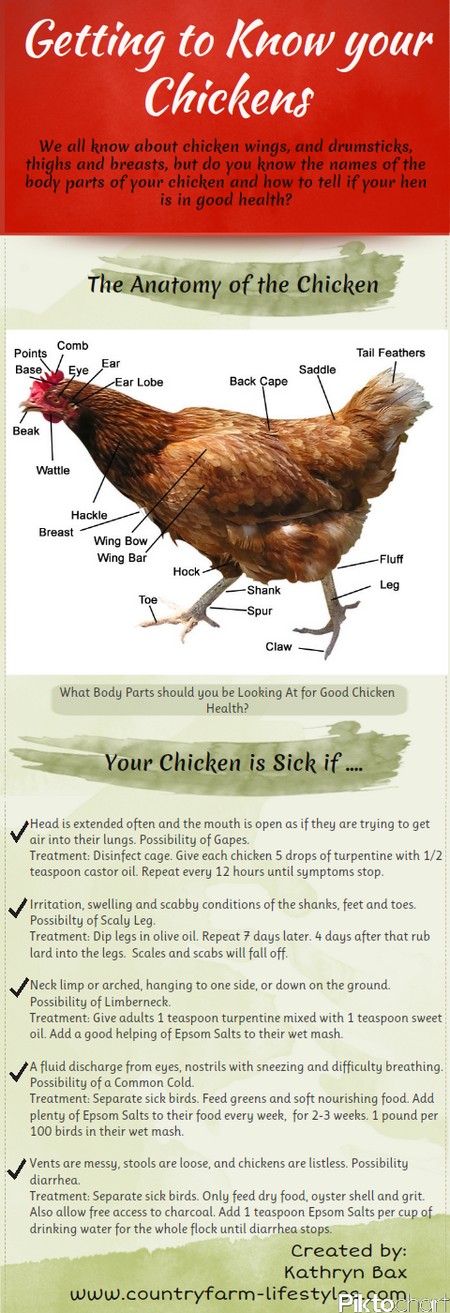
Learning how to raise chickens that are healthy means taking care of their health needs straight away. If you have a sick chicken try out natural home remedies especially if you are raising organic chickens or laying hens. We also have information on dealing with coccidiosis . The only way of staying on top of your chickens' health is to make sure that you interface with them daily and are observant to any changes, no matter how slight.
Early symptoms when treated usually ensures a quick recovery for your birds. Therefore if you see a chicken that is standing away from the flock look carefully for any tell-tale signs. Are the eyes bright or do they look glazed? Are the wings dropping? Are any stools loose with stained feathers around the vent? Is there blood around the vent? Are they off their food? Do they have ruffled feathers? Do they have breathing difficulties? Can you see any bundles of worms in the run from parasitic infestation?
If in doubt at all regarding your birds' health it is best to call the vet as soon as possible for serious ailments that cannot be treated by yourself.
Chicken coops and chicken pens should be spotless. And every spring and fall should be treated with fire to rid the area of parasites and disease. See our page on chicken pens for more information on this subject.Read some FAQ on Raising Chickens.
More Chicken Care Resources you May be Interested in
Go from How to Raise Chickens to Self RelianceFeeding Chickens
Go to FAQ in Raising Chickens
Go to Caponize Chickens
Go to Butchering Chickens
Go to Natural Remedies for Sick Chickens
Go to Chicken Breeds
Go to Backyard Chickens
Go to Aren't Chickens all the Same?
Go to Coccidiosis in Chickens
Go to Raising Bantam Chickens
Go to Chicken Coop Plans
Go to Chicken House Plans
Go to Free Farm Videos
Go to Farm Animals
BESTSELLERS on HOW TO RAISE CHICKENS
You can Add your own Comments, Tips and Ideas on How to Raise Backyard Chickens Here!
We have lots of pages where you can contribute to throughout this website. We love hearing from our readers, and hope you will be one of those we hear from too. Look around our homesteading website. If you have some comments, tips and ideas on how to raise backyard chickens in your own backyard of your own, please submit them. All you need to do is type and submit. We will do the rest!
Leave a Comment
Do you have anything that you would like to add after reading this page? We would love to hear your thoughts. If you can add additional information to what has been written here you will be adding value to the website! No need to have any special skills - just type and submit. We will do the rest!
Other Comments
Click below to see comments from other visitors to this page...
Why won't my chickens sit on their eggs? 
Acquired 8 hens and 1 rooster. Rooster mounted hens regularly and hens laid eggs but none of the hens attempted to sit on the eggs.
Assumed the rooster …
organic eggs/chickens?
i've always given my chickens cracked corn from the feed store, table scraps, veggies from store and let them free range... Would this not be considered …
Donna Not rated yet
My 1 yr old Rhode Island Red hen became ill about April 24th - listless, sleeping a lot, not eating, comb turned almost bluish/black within a few days. …
Chickens in gardens Not rated yet
Is it safe to let chickens in vegetable gardens while vegetables are growing?
****
Pam, if you want to feed the chickens rather than yourselves …
Help with a Sick Chicken Not rated yet
I have just found your site, and as my fiance' and I are creating a small farm for ourselves, and, for older teens without parents or families, we need …
Worming Not rated yet
Do I have to worm my chickens? I have 3 that free range in the backyard. I have not wormed them and I believe that I should. Is this correct?
A Bug-Free Chicken Coop Not rated yet
To protect the poultry from mites and other insects while roosting, I constructed a roost hanger, as shown, with oil cups made of empty shoe-polish cans. …
Did you find this page helpful?
Sharing is a way of saying, "Thanks!"
Follow Us and Keep Up to Date
Don't miss out on our latest news and articles. Sign up for our free monthly e-zine!


OTHER SECTIONS OF INTEREST
 Bantam
Chickens
Bantam
Chickens Chicken
Breeds
Chicken
Breeds Caponize
Chickens
Caponize
Chickens FAQ
Backyard Chickens
FAQ
Backyard Chickens Feeding
Chickens
Feeding
Chickens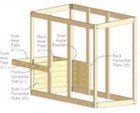
Chicken Coop Plans
 Natural
Remedies for Sick Chickens
Natural
Remedies for Sick Chickens Farm
Animals
Farm
AnimalsChicken eBooks and Information

Click Here

Click Here
Make an Incubator

Click Here

Click Here
Raising Chickens Bonanza

Click Here
CHICKEN TIPS
|
New! Comments
Do you have something of value to add? Leave me a comment in the box below.