Growing Carrots from Seed in Beds, Containers or Pots
Just remember, that a small amount of seed goes a long way, and the most common problem with novice vegetable gardeners is that they end up sowing the seeds to thick, resulting in overcrowded growing conditions and fed up growers.
Hopefully you won't be one of those once you follow our simple guide to step by step carrot growing. Learn about soil conditions, optimal growing conditions and how to store. Learn how to grow carrots here and you will realize that there really isn't much in it once you know how.
Know when to plant vegetables, as well as during the month for planting carrots by the moon.
Growing Carrots from Seed and Know when To Sow
In hot climates avoid sowing the seeds during the hottest months, and in cold climates wait for spring or plant 3-4 weeks before the last expected frost. So if you live in an area where you have cold winters, sow from August through to March. l say this, because carrots which mature when spring is approaching tend to bolt to seed.
You can plant carrots until midsummer in cool areas.
For those of you who live in temperate and sub-tropical areas carrots can be planted all year round. However, those who live in tropical areas can sow carrots from March, or whenever the wet season ends, and continue sowing until about August.
If you sow carrot seed in late autumn or winter they may run to seed without forming any roots.
How many Carrot Seeds Do I Need to Sow?
You can do a lot with a glut of carrots, like making carrot cake, soups, jams etc. However, if you just want to grow carrots for eating straight out the garden without any freezing involved, then 4-6 x 1 meter rows of carrots is more than enough.
Remember though, to stagger the sowing times sowing these rows 4 - 6 weeks apart to lengthen your harvest time and to make sure that you don't end up with a glut. Remember too, that you can start pulling carrots very early.
Heirloom Carrot Varieties for Growing Carrots
 For those of you are are looking to
plant heirloom carrots there are certain varieties that we can
recommend.
For those of you are are looking to
plant heirloom carrots there are certain varieties that we can
recommend.
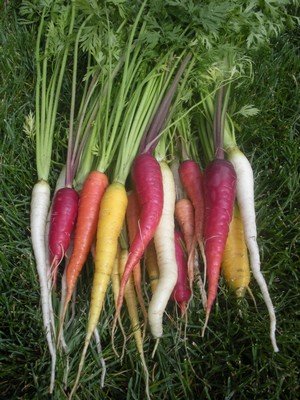
In the picture left, here you can see a variety of heirloom carrots and the various colors they come in other than boring old orange!
The Cosmic Purple Carrot is an interesting variety. It has a purple outer-skin with an orange core. It matures after 65 - 70 days.
The Danver's Half Long Carrot grows to 6 inches, is a stubby, coreless carrot that is ideal for growing in raised-bed gardens as it doesn't grow too long.

And finally we recommend Scarlet Nantes, an old French heirloom carrot variety that is best for storing, freezing or canning. And ideally suited for cold climates. It matures in 65 days
Recently harvested heirloom carrots
Soil Preparation for Growing Carrots
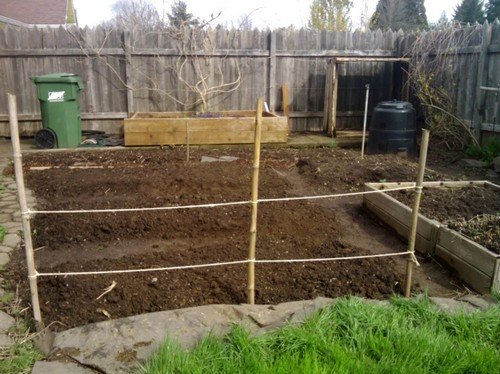
Good soil preparation for your carrots and vegetables is essential
Because the soil where carrots have been planted is difficult to weed once the carrots start growing, it is better to prepare the soil well before you want to sow the seeds. Prepare the soil, water it, and allow it to stand for at least two weeks allowing time for any weeds to come up. These can be hoed back into the soil before they have had time to spread their seeds, and are a good source of nitrogen for the carrots.
Carrot growing should be done in a well-drained, deeply dug sandy loam and placed in a sunny spot, although carrots will also grow in dappled shade at a push. However, although they don't like wet feet, carrots need a lot of water, and the soil should never be allowed to dry out.
You will get cracked carrots if they are not watered during dry weather. The beds should be dug over with well-rotted manure or compost added to the soil as this helps to retain the moisture in the soil.
Make sure that the manure is well-rotted as if your manure is too fresh it will also cause your carrots to fork or to send out side roots. Another caution is not to over-fertilize or add fertilizers that are high in nitrogen as they can cause the leaves to grow rather than the roots.
The soil should be higher in phosphorus and potassium. Potassium is essential for good growth and health. Adding wood ash to the beds is one way of achieving that. The ideal pH value is 6.5 for optimal growing conditions.
For those of you with heavy soils, don't despair. You can grow carrots successfully by choosing the shorter varieties such as Early Chantenay or Baby. Both of these varieties can be used to grow carrots in containers.
Carrot seeds are very fine, and the biggest mistake people make when sowing the seeds is that they are done too thickly. This results in too many carrots growing in one area, and a lot of thinning out to be done which is a waste of the seed.
To make sure that they are evenly distributed and sown thinly mix the seed with a small amount of dry river sand and then sow. An ideal way of doing this is to take an old salt cellar, enlarge the openings a little, and use this to sprinkle your seeds.
Plant to a depth of about a 1/2 inch or 6 mm.
Be patient when waiting for your carrot seedlings to show. They can take anything from 2-4 weeks and need to be kept moist at all times. You may do this by placing wet burlap over the beds but make sure that you remove these once the carrots start to sprout.
Thinning Out your Growing Carrots
Thin your carrots so that they are 2-3 cm apart when the seedlings are about 5 cm high.
A second thinning will probably need to be done when your carrots are 15 cm high. Thin them out to 5 cm apart.
Don't waste the carrots that you have thinned. The first lot of thinned out carrots can go onto the compost heap. The second lot will have roots that are big enough to eat and can be used either raw or cooked.
However, at all costs, don't leave the thinings on the soil near your carrot plants. The crushed carrot leaves help the carrot fly to find the carrots through smell.
Growing Carrots in Containers and Pots
The main issue with growing carrots in containers and po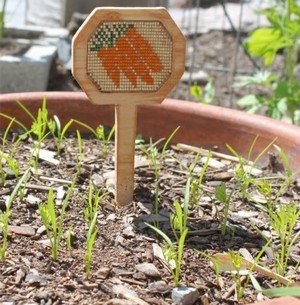 ts is that you have to
make sure that you have enough depth to your container that you are
using to grow the carrots in. Usually the roots will grow to a depth of
about 6 inches and so you will need a container at least 9-10 inches
deep.
ts is that you have to
make sure that you have enough depth to your container that you are
using to grow the carrots in. Usually the roots will grow to a depth of
about 6 inches and so you will need a container at least 9-10 inches
deep.If you go to a shop that already sells fruit and vegetables invariably they have polystyrene boxes that were used to transport the vegetables or fruit in, and they will sell them to you at a $1 or so. These boxes are sturdy, easy to make drainage holes into and are deep enough containers for growing carrots in. You are also helping the environment by recycling. However, polystyrene is a curse to our environment and that shouldn't be forgotten. Carrot seedlings growing in a container
However, ordinary buckets, terracotta pots or any other container that is wide enough, deep enough and has drainage holes can be used to grow carrots.
Soil for Growing Carrots in Containers
The potting mix for your container should be light and have just the right nutrients.You can make your own container gardening soil by taking 3 parts of good garden loam, 1 part of moistened peat moss, and 1 part coarse river sand. Added to this should be some well-rotted farmyard manure or compost.
In addition to your organic material, you can add the following to every 8 liters of soil:
1/2 cup Epsom salts
1/4 cup coffee grounds (rinse them clean)
4 egg shells (dried and crushed to powder)
Sowing and Thining Carrot Seeds in Container Gardening
If you do end up sowing too many seeds, then you will need to wait until the carrots are at least 25 days old before you attempt to thin out your fragile carrot seedlings. Do so with great care as you don't want to lose all the seedlings in the clump by over disturbing the soil.
In addition, you will need to make sure that if there are any parts other than the leaves showing that you cover this area immediately with more soil. If the stems remain bent with no soil covering, the roots will not form carrots.
The main problem with container grown carrots, or any vegetables grown in containers for that matter, is watering. You will have to make sure that your containers never dry out, which often happens with container gardening as you need to water them far more than you would if they were out in the open ground.
Growing Carrots using Biodynamics
If you want to grow carrots using Biodynamics, then you should not harvest the carrots to soon, but allow the natural sugars time to develop. Spray the carrots with horn silica preparation in the afternoon, 3-4 weeks before harvest when the moon is in Ram and Scales.
Carrots harvested on leaf days easily rot in storage, so this time should always be avoided.
Companion Planting for Growing Carrots
Not only will the radishes emerge first, breaking the crusty soil for the carrots and allowing them to emerge better, but radishes and carrots are good companion plants and help the other to grow.
Carrots can also be planted together with lettuce, chives and onions. Onions are particularly good to plant when you want to prevent carrot fly.
Problems, Pests and Diseases when Growing Carrots
One thing you should prevent is the carrot root tops from turning green. This happens when they grow above the soil line and are exposed to the sun. Just make sure that the carrot roots are well-covered with soil.
With regards to pests and diseases they are fairly free of these. "Top Weight". Western Red" and "All Seasons" are 3 such varieties that are free from viral diseases. The most common garden pest is the carrot rust fly. However, this can be avoided by good crop rotation practices.
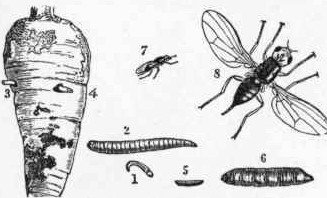
The life cycle of the carrot rust fly
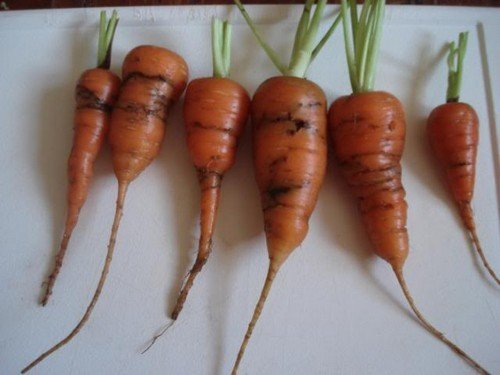
All of these carrots have been affected with carrot fly
The other problem you may have is leaf blight. If you find blight on your carrots destroy any diseased material immediately. Always start with clean, good-quality seed and practice crop rotation to minimize disease.
Aphids also can attack carrots causing the root to be distorted and the leaves to turn yellow. You can spray aphids with soapy water, white oil or Pyrethrum.
Root rot may also affect Western Red during humid autumn conditions, but Top Weight, All-The-Year-Round, Progress and most of the carrot varieties today have a resistance to this problem.
When to Harvest your Growing Carrots
If you are growing carrots on light soils, then they can stay in the ground well into winter. Lift them from heavy caly and store in boxes of sand.
How many Carrots will I get from my Seeds?
So how many carrots will you get as a crop? When growing carrots you can expect a crop yield of about 500 g ( 1 lb, 2oz) per 1 square foot, (30 cm) although this depends on the variety of the carrots you have planted. If you are planting early varieties, you can expect a yield slightly less.How to Store and Keep Carrots
To store carrots for a long time you can store them by burying them in wooden boxes filled with moist sand or by covering them in mulched trenches outside.
COUNTRYFARM LIFESTYLES TIP: Did you know that if you add 1 tablespoon of grated carrot to every batch of jam you make, that you will never have any more trouble with jam setting again? See some of our jam making recipes here.
Carrots are considered one of the top super foods available. They are rich in Vitamin A and Beta-carotene and therefore excellent for your eyes, helps keep your arteries clear, and may prevent tumors from growing. See how to grow blueberries and broccoli, two more super foods.
Questions & Answers on Carrot Growing Problems
Q. What causes my carrots to turn green on the crown (top) of the root?A. This condition is called "sunburning." It causes an off flavor and dark green pieces in the cooked product. Cut away the green portion and use the rest of the root. When the tops are healthy, sunburning can be avoided by pulling a small amount of loose soil up to the row when the roots are swelling (about 40 to 50 days after planting).
Q. Why are my carrots misshapen, with forked and twisted roots?
A. Forking may result from attacks of root-knot nematodes, from stones, from deep and close cultivation or (more frequently) from planting in a soil that was poorly prepared. Twisting and intertwining result from seeding too thickly and inadequate thinning of seedlings.
Q. What causes my carrots to have fine hairy roots, poor color and a bitter taste?
A. These conditions are caused by a viral disease known as "aster yellows."
Q. What is causing my carrot seedlings to burn off?
A. You are trying to grow carrots in hot, sunny weather at a time that the carrot plants are too tender. Sprinkle the plants with water, and keep the soil moist.
Q. Why are my carrot roots cracked and split?
A. The inside of the carrot grows faster than the skin. When your carrots get a lot of water followed by no water or if you have overfertlized the soil, this is when the problem occurs. Pile up the earth to cover the crowns during growth and make sure the carrots are evenly watered during the growing season.
Q. Why do my carrots have lots of leaves but very little root growth?
A. You have too much nitrogen in the soil.
Q. Why did my carrots run to seed early without forming any roots?
A. Your seedlings were exposed to cool weather during an early spring growth.
Don't miss out on our latest news and articles. Sign up for our free monthly e-zine!


OTHER SECTIONS OF INTEREST
 Natural
Pesticides
Natural
Pesticides Garden
Pests
Garden
Pests Growing
Vegetables in Containers
Growing
Vegetables in Containers How to
Make Compost
How to
Make Compost Raised
Bed Gardening
Raised
Bed Gardening
Grow Vegetables
New! Comments
Do you have something of value to add? Leave me a comment in the box below.