Growing Tomatoes from Seeds, Plants, in Containers, Upside Down and Indoors
A complete guide to growing tomatoes from seeds, in pots and containers, upside down and growing tomatoes indoors.Learn about soil conditions, sun hours, spacing your tomatoes, watering, transplanting tomatoes and a whole lot more for this super food.
For a quick overview on how to be successful at growing these vegetables you need the following:
- 8 hours of full sun a day
- Deep, free-draining, fertile soil
- Regular feeding and mulching
- Shelter from strong winds
- Regular staking
- Consistent watering
- Constant attention
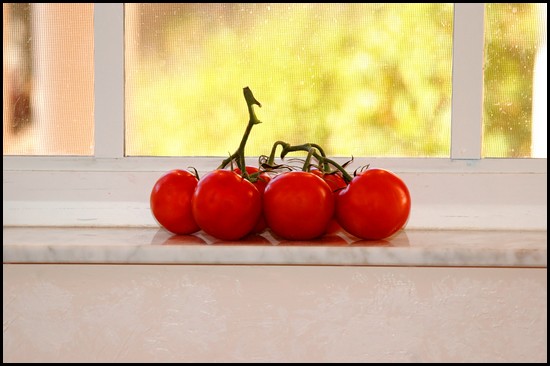

Cherry Tomatoes on a Window Sill by Kathy Wynn | Dreamstime.com
Straw is also good to use when your plants are fruiting in the spring and summer. This keeps the fruit off the soil preventing them from spoiling and away from chewing insects who might get round to spoiling a good part of your crop.
Growing Tomatoes in Good Soil
When growing tomatoes always make sure that your soil is rich in organic material and has a PH balance of between 6.0 - 6.5 as these vegetables love an acidic soil. The soil should be kept moist at all times, but it should be free-draining, never water-logged.Because tomatoes have a large root system, they benefit from being grown where a winter green manure crop has been grown and dug in and left to decompose. If it is inhabited by earthworms then you know that you will have a great crop!
The soil should not be too rich in nitrogen. If it is, you will get leafy and leggy plants with very little fruit. Too little nitrogen and your plants will be stunted and their leaves will be yellow. Good sources for nitrogen are well-rotted manure, compost, fish-emulsion, blood meal, and legume cover crops.
Phosphorus promotes strong roots and the formation of flowers, fruits and seeds, and helps the plants resist disease. If the soil is poor in phosphorus your plants will stunted, with thin stems and a purple tinge to the leaves on the underside. Good sources of phosphorus can be found in bone meal and poultry manure.
Potassium is important for your plants to grow well and to resist disease. Too little potassium will result in stunted plants, poor yields and yellow leaves. A good source of potassium can be found in wood ash and greens.
Calcium is vital in building strong celled-walls and also prevents blossom-end rot which is a common problem in tomato growing. Natural sources of calcium include wood ash, crushed egg shells and bone meal.
Growing Tomatoes and When to Plant
The ideal temperatures for the fruit to set is between 17-25°C (62-77°F). If temperatures exceed 28°C (80°F) then the fruit will be softer and orange and yellow in color, especially if there is not a lot of leaf cover.
Tomatoes love a warm and sheltered position. They require full sun in most climates, but some light shade is preferable in hot zones, as excessive heat can cause problems. They also need to be protected from wind and frost.
Tomatoes are ideal plants for growing vegetables in containers, raised gardens and square-foot gardening. You will be able to harvest your tomatoes after about 10 - 20 weeks, depending on the variety.
How Many Tomato Plants should you Plant?
If you have a small family 4 tomato plants is more than enough. If, on the other hand you want to grow tomatoes for jam, canning, sauces, pastes, juicing etc., then you will probably need about 10 - 12 plants.
If you are growing tomatoes
organically, make sure that you have bought organic seed, free of
chemical treatment.
Determinate, Indeterminate and Heirloom Varieties for Growing Tomatoes
Determinate Tomatoes
These are small, compact plants that grow in bushes that don't need staking. Because they set their fruit at roughly the same time, cropping time is fairly short, and these varieties are excellent for canning.
Indeterminate Tomatoes
These grow to quite some height and definitely need some form of staking, using either wire cages or bamboo tee-pees. This variety is long cropping, with the fruit setting over a long period of time, stopped only by the early autumn frosts. They mature later than the determinate type and the yields are heavier.
Heirloom Tomatoes
For those of you who want to know how to grow heirloom tomatoes these are varieties that have stood the test of time and are the old fashioned varieties that are not always perfect in shape, but have masses of flavor. Heirlooms are open-pollinated and come in all sorts of colors.
The most interesting of them all, and one
of my favorites is the Black
Russian Heirloom Tomato from a looks perspective. Brandywine is
another heirloom variety that is pinkish red in color and has a very
good taste.
Growing Tomatoes and Where to Plant
Gardening Tips for Growing Tomatoes
Never plant tomatoes within a 50 foot radius of any walnut trees. The walnut tree leaves contain a toxin that is deadly to tomatoes and they will wilt and die. This happens when it rains and the chemical is washed off the leaves and onto the soil.Never plant your tomatoes near beets. Beet leaf-hoppers can carry a virus called curly top to your tomatoes.
Never plant your tomatoes near brassicas or carrots. Brassicas and carrots will inhibit your tomatoes' growth and they will not do well.Good plants for Companion Planting with tomatoes are marigolds, basil, garlic, chives, asparagus and parsley.
Growing Tomatoes from Seeds
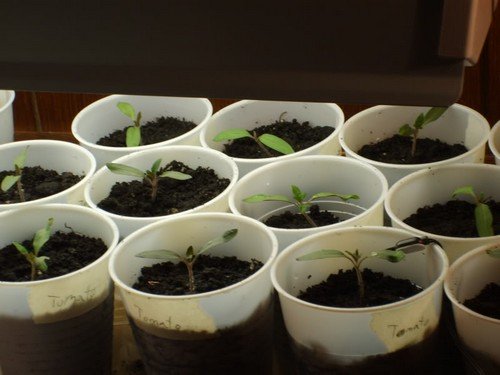 Growing Tomatoes from Seeds
The tomato seeds should now be placed carefully in the depressions making sure that you are not planting too many seeds per row. Once you have finished, you will need to cover the drills with either some more sterilized soil, river sand or vermiculite. Firm it down lightly and water the seed bed with a fine spray making sure that the soil is well dampened.
Initially place in a shady location. If you are starting your seeds off in the beds you can cover the soil with sheets of newspaper and keep this and the soil underneath it damp.
As the tomato plants begin to emerge, remove the paper. For those seeds that you have planted in seed boxes, you can harden them off by exposing them to more and more sunlight before it is time to transplant them.
Growing Tomatoes and Transplanting Tomato Plants
Most tomato plants are ready to be transplanted when they are about 75 - 100 mm in heights and usually between 4 and 8 weeks old.
Reduce watering your seedlings 10 days before transplanting. I am not saying don't water them, what I am saying is just don't water them as much as you have been doing so in the past. If the weather is very hot, then your reduction of water should really be over 5 days.The last 2 days water should be withheld completely. However, on the day that you are going to plant them out, you should water them thoroughly 6 - 12 hours before hand. Make sure that where you are going to transplant them to has also been well watered.
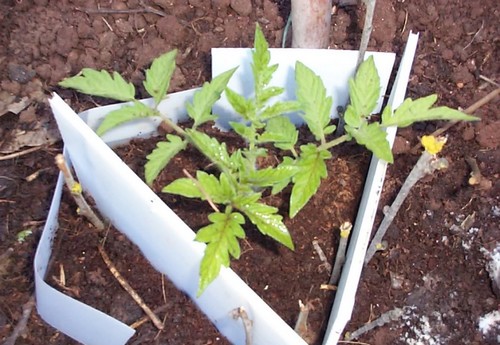
Transplanting tomato plants and shielding them from the sun.
The best time to transplant your seedlings is late afternoon, early evening when the heat of the sun has gone. This then allows your plants the night to re-establish themselves before the next day.
Choose your seedling wisely. Although you will be tempted to plant them all out, only choose those that are strong, and discard the others. Lift your seedlings out of the seed box with a garden trowel and lay them at the recommended intervals given to you on the original seed packet.
Dig a small hole and carefully place the seedling inside. When transplanting tomato seedlings always plant them with the first set of leaves below the soil line. Your plant will send out roots from the buried stem which will encourage a strong root system. Firm the seedling gently by pressing down around the stem. When you have finished, water the transplants well.
Know the spacing conditions for the
type of variety you have planted. Some, like cherry tomatoes can be
planted as close as 18-24 inches away from each other. However, larger
varieties may need up to 3 feet and more in space.
How to Increase a Tomato Crop
As your plants grow you will need to remove the side shoots to increase cropping. This is done by removing the shoot that develops between the leaf and the stem. Remove this gently with your thumb and forefinger. Watering and regular feeding will result in a bumper crop.
In the heat of the summer when the air is still it may mean that your tomato plants are not being pollinated, even though the flowers are open. Go through your tomato plants and give them a gentle shake. This will help pollinate your tomato plants, and in turn increase your tomato crop. But be very gentle as tomato stalk are very fragile and break easily.
Growing Tomatoes and Feeding your Tomato Plants
Tomatoes are heavy feeders and so they should be fed when the first fruits are about to set - say 4 - 5 weeks after transplanting. Give them an application of organic liquid manure every two weeks.
This is another tip for your plants. Not only do tomatoes love this but roses and green peppers do too - mix 1 tablespoon of Epsom salts to 1 gallon of water. Spray it on your plants when they start to flower.
Growing Tomatoes and Mulching your Tomato Plants
After a couple of weeks of transplanting you can mulch your plants with a dressing of compost. This will not only keep the moisture in your soil and discourage the growth of weeds, but it will also give the plant added nutrients which is far more beneficial than other mulches like grass clippings or straw.
Growing Tomatoes and Staking your Tomato Plants
Some tomato cultivars will benefit from staking, especially those that are indeterminate types or vine tomatoes. However, staking is easy. Just get yourself a cane, such as bamboo and place it close to the stem of the plant and push down into the soil. If your plants are large you can cut up lengths of 2x2 which will give your plants better support.
Tie the plant to the stake with either strips of old cloth, old stockings, scooby-doo wire or raffia. Purists will want to prune the plant into a single stem which will reduce your crop. I don't bother. I just make sure that the plant is upright and well-supported with more access to the sun, which it wouldn't have had if it were lying on the ground. Staking also makes harvesting your crops a lot easier.
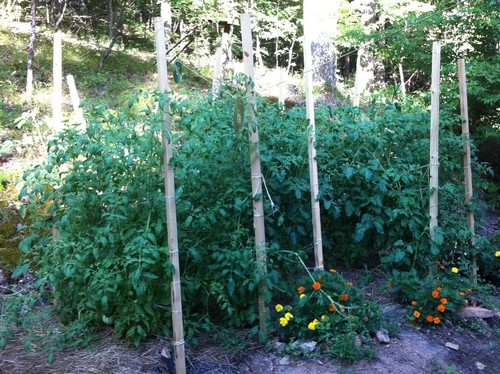
Here is an example of staking tomato plants.
Note the companion planting of planting the tomatoes with the marigolds to protect the tomatoes from nematodes. There is also an old CD strung on string to protect the tomatoes from the birds.
Harvesting your Tomato Plants
You can harvest tomatoes at any time of ripeness and for those who find that they still have a glut of green tomatoes that haven't ripened yet and the frosts are coming, pick them. There are many things that you can do with green tomatoes; fried green tomatoes, chow chow and you can make a green tomato pie filling out of them.
Pick your tomatoes early in the morning on hot days and pick them underripe on hot sunny days. This is because on hot days the heat can cause the sugar in their tomatoes to become starchy. When you have harvested them bring them indoors and ripen them not on window sills as they don't like the light. Rather ripen them by wraping them in newsprint and place them in paper bags. Place in a cool spot and check on them often.
If you have picked ripe tomatoes from the vines keep them out of the fridge. Research has shown that even 40 minutes of refridgeration can spoil both the texture and flavor.
Diseases when Growing Tomatoes
Blossom-end Rot is largely caused by a lack of calcium in the soil, erratic watering habits, temperature extremes and root damage.
One can help minimize the effects of blossom-end rot by mulching the plants to keep moisture in the soil, and spraying with a seaweed extract will boost your plants.
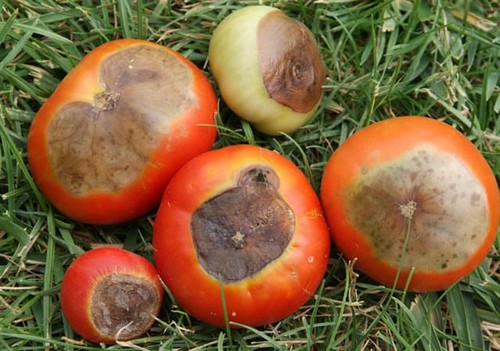
An example of Blossom-end Rot
Verticillium Wilt, causes yellowing and wilting of leaves, especially older ones. In some plants the leaves may even curl up. Prevent future infections by sterilizing all gardening tools, clean up garden debris and buy wilt-resistant varieties and practice crop rotation.
Smoking or handling tobacco and then working with your tomatoes can help spread Tobacco Mosaic Virus in susceptible plants. Leaves show yellow, white and green patches and puckers along the vein. Make sure that you wash your hands well after using tobacco products or have been with tobacco plants.
Growing Tomatoes Upside Down
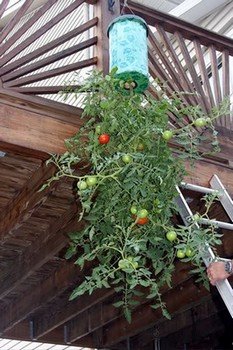 Growing tomatoes upside down has become
the latest in growing tomatoes in small spaces, and it also has a
number of other benefits as well.
Growing tomatoes upside down has become
the latest in growing tomatoes in small spaces, and it also has a
number of other benefits as well.
First of all, you can prevent your tomatoes from going rotten from soil contact, you can protect them from cutworm and other little beasties that will attack your tomatoes, there is no weeding involved, nor do you have to bend down to pick the crop!
So how do you grow tomatoes upside down
exactly? Well, some people modify plastic buckets to plant their
tomatoes upside down, or you can get a purpose-made upside down plant
grower, that makes things very easy. Just how easy? See for yourself in
the video below. Growing tomatoes upside down just became a
whole lot
easier!
Buy your own Upsidedown Tomato Growing Bags
Click on each of the pictures for prices and details.Gardening Video on Growing Tomatoes Upside Down
Growing Tomatoes in Containers
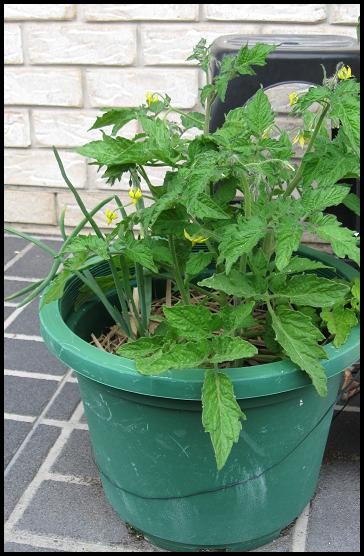
Growing tomatoes in containers is easy enough to do as long as you remember to water them on a regular basis.A 6 inch pot should be large enough to grow a tomato plant, but I usually like to plant them in larger containers. Look for the miniature varieties of tomatoes to grow in containers such as "Tiny Tim" and "Pixie".
Make your Own Container Gardening Soil for your Tomato Plants:
- 3 parts of good garden loam
- 1 part of moistened peat moss
- 1 part coarse river sand
In addition to your organic material, you can add the following to every 8 liters of soil:
- 1/2 cup Epsom salts
- 1/4 cup coffee grounds (rinse them clean)
- 4 egg shells (dried and crushed to powder)
To get air into your soil and to make it lighter, add some Perlite. 1/3 of the volume should be made up with Perlite. Don't add too much as it is a water-repellent, and unless you add extra peat moss, you will find that your soil will dry out quicker than you want.
Finally, add a good handful of blood and bone to give the tomatoes a good start in their containers.
I am also a fan of poultry manure more than any other for vegetables because of its high nitrogen content. Just make sure that it is not fresh, as it will burn the roots of your tomatoes.
Even though the tomato plants are small, they may still need to be staked to support the fruit. Also make sure that the plants get sun from all sides.
Growing Tomatoes in Hanging Baskets
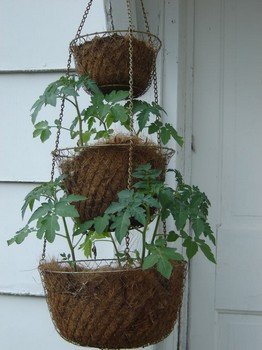 As you can see, you can also grow tomatoes in
hanging baskets.
As you can see, you can also grow tomatoes in
hanging baskets.
As you know, tomatoes grow well upside down, and by growing your tomatoes in haning baskets, you are getting the best of both worlds; growing tomatoes in containers and growing tomatoes upside down!
Where the hanging basket has been placed here outside the door is perfect because when you have to walk past the baskets every day you won't forget to water it.
Lack of water, or inconsistently watering is the number one enemy of growing vegetables in containers because people often forget and then lose their vegetable very quickly as a result.
Growing tomatoes in Hanging Baskets
Growing Tomatoes Indoors
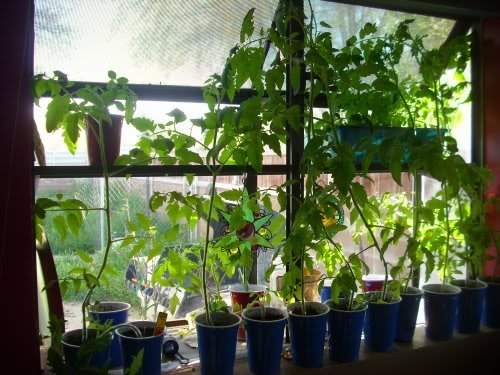
Growing Tomatoes Indoors
Although traditionally, tomatoes are grown outdoors as an annual, it is actually a perennial that will grow for several years indoors, if well looked after.
For growing tomatoes indoors choose a determinate type, or even small cherry tomato plants are ideal. I say this because when you grow indeterminate tomatoes you will need to have a lot of space for them.
Indeterminate tomatoes will have a root system as long as the plant is tall. So if your plant is 4 feet high, you will need a container 4 and half feet deep at least for the roots to grow properly.
Determinates will grow to a certain height, and then stop growing while the fruit sets and ripens. Fireball, Urbana and Sioux are good varieties to grow indoors. If you are looking for dwarf tomatoes, then you should try Tiny Tim.
However, even determinate tomatoes need space to grow, and you would need a 10 gallon container that should be as wide, as it is deep. Make sure that you have a slightly acidic, sandy soil, with a good handful of blood and bone as a slow release fertilizer. Tomatoes like a pH of 6-7.
When giving them light make sure that within a 24 hour period your plants are exposed to at least 9 hours of light a day, and making sure too that they have at least 7 hours of darkness. If you don't get this right, your tomatoes will fail miserably. If the light is too dark then you will end up with spindly specimens that are struggling to find light, as can be seen in the picture above.
Finally, the secret to growing good tomatoes, either indoors or outdoors is phosphorus. Make sure that you don't give your tomatoes too much nitrogen as this will give you too many leaves and very few tomatoes.
Once the flowers start to appear, give the plants a little shake every now and then to make sure that the flowers are pollinated.
Finally, make sure that when growing tomatoes indoors your room temperature is not too hot or cold. 68 degrees F. is ideal, but if it drops to 32 degrees F. or lower your tomato plants will die.
Growing Tomatoes and Recommended Cultivars
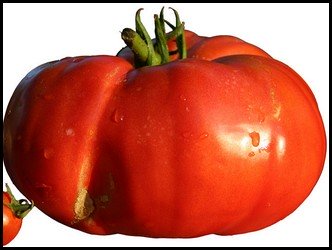 Beefsteak
Tomatoes
Beefsteak
Tomatoes
Throughout the world there are thousands of cultivars and strains of tomatoes.
I prefer the heirloom tomatoes, however, there are also others that are well trusted such as Ox heart and Ponderosa for their large size and meatiness. The Beefsteak tomato is an heirloom and belongs to these large varieties.
However, the plants are not heavy
yielders and the fruits are often of poor shape because of their
susceptibility to several physiological disorders.
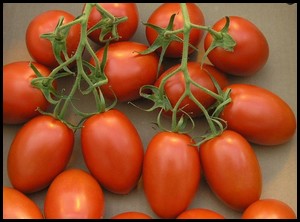
Plum Tomatoes
The plum tomatoes are elongated and are excellent tomatoes for canning and making sauce. The Roma tomato is a well known Italian variety for this. They are usually wilt-resistant and are heavy fruiters making them very popular with homesteaders. The Reggae is the highest yielding and needs staking. The San Marzano is an ideal variety for growing in pots, and is self-supporting.
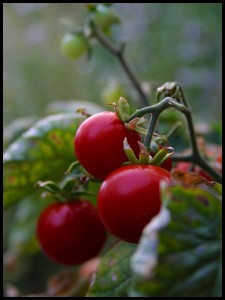
Cherry Tomatoes
Cherry tomatoes are very popular as they make a lovely addition to salads.
The are a smaller variety and sometimes more sour than their bigger cousins.
However, there is a variety of cherry tomato called 'Sweet Bite' that is a vigorous grower that fruits abundantly and is sweet in taste.
It is a tall variety that will need staking.
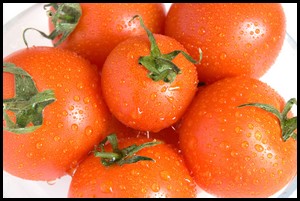
Globe Tomatoes
The Early Girl tomato is popular with home gardeners because of its early fruit ripening. It is known as a globe tomato due to the fact that it is fairly round and smooth, unlike the beefsteak varieties.
Globe tomatoes are tall growing and needs support as the plant grows. Plants are reliable and prolific with fruit of a bright color and good flavor.
Time from setting out transplants to
first crop
is about 52 days - compared to as long as 80 days for beefsteak types.
'Early Girl' also is an indeterminate variety, so it keeps producing
all season long.
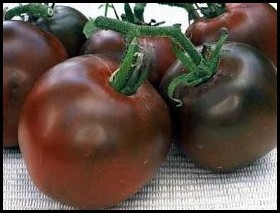 Heirloom Tomatoes - Black Russian
My favorite heirloom tomato is the Black Russian.
With its dark fruit it looks great in a salad and has an excellent sweet taste with spicy and smoky undertones that are enhanced when dried.
The flavors really are deliciously intense and the other great thing about this variety is that it is resistant to most diseases, fruits early and is a heavy producer. What more could you want in a tomato?
What to do with Tomatoes?
Most people grow tomatoes, if nothing else in their vegetable gardens, but then after they have harvested them all, they wonder how they are going to get through them.Tomatoes are very useful in salads, soups, stews, or just eating on the run. Due to its high acid content, tomatoes can be used to make tender even the toughest cuts of meat.
I love eating tomatoes anyway I can, but best of all if I can tomatoes then I can have them all through the year.
Here is a Quick and Easy Canning Recipe for Tomatoes:
Slice the fruit in halves or quarters and stuff them into your 2 lb Kilner jars. Fill up with plain cold water, leaving a 1/2 inch headspace, screw the lids on tight but then give a small quarter turn back to allow for some expansion.Place jars in a large pot, making sure that they are not touching and fill the pot with enough water to fill up to the necks of the jars.
Set the heat low enough to take 90 minutes to bring them to 190 degrees F. and then leave them at this temperature for 15 minutes. Take the jars out and place them on the counter top covered with a tea towel to cool down. Tighten lids on jars and store in a dark cupboard to prevent light from destroying the Vitamin C content.
Tomatoes canned by this method will last up to 3 years.
See our other pages for more canning recipes.
Follow Us: Facebook, Twitter, Google+, Pinterest, RSS
 |
 |
 |
 |
 |
Leave a Comment
Do you have anything that you would like to add after reading this page? We would love to hear your thoughts. If you can add additional information to what has been written here you will be adding value to the website! No need to have any special skills - just type and submit. We will do the rest!
Don't miss out on our latest news and articles. Sign up for our free monthly e-zine!
Go from Growing Tomatoes to Growing VegetablesReturn to Self Sufficient Living
Go to Growing Vegetables in Containers
Go to When to Plant Vegetables

NAVIGATION COLUMN
Find us on Google+Country Shopping
Country StoreFree Stuff
Free MagazinesHomesteading Blogs
Country Living Blog Gypsy's WanderingsCountry Living
Country Home Country Living Country Crafts Country Holidays Picnics CampingSelf-Sufficiency
Self-Sufficient Living Organic Gardening Do It Yourself Easy RecipesHomesteading
Homesteading Today Homesteading Q & A Homestead Animals Urban Homesteading Homestead DirectoryGoing Green
Green LivingFarms Around the World
South Africa United Kingdom United States Canada Central America Australia New Zealand Europe Farm Photos Farming Articles True Farming Stories Farms for Sale Organic Farm ProduceMiscellaneous
Guest Book Search Site Survey Advertise with UsMiscellaneous
Guest BookSearch SiteSurvey Advertise with Us


OTHER SECTIONS OF INTEREST
 Natural
Pesticides
Natural
Pesticides Growing
Vegetables in Containers
Growing
Vegetables in Containers Raised
bed garden
Raised
bed garden Square
Foot Gardening
Square
Foot Gardening How to
Make Compost
How to
Make Compost
Grow Vegetables
Canning Recipes
New! Comments
Do you have something of value to add? Leave me a comment in the box below.