Raising Ducks for Meat, Eggs or Both with Information on Duck Breeds
People keep ducks for different reasons. Some keep ducks for breeding, others keep ducks for the meat or duck eggs, or both. Others may keep ducks to keep down the fly population on a farm that has livestock, and others may not even know why they are keeping ducks, except for the pleasure they bring to the family and their farms.
Keeping a duck is like any farm animal, you have to give thought to where they will be housed, their safety from predators during the day, swimming facilities, food and health, and any offspring that might come about during their duration.
Photo courtesy of Cepheus
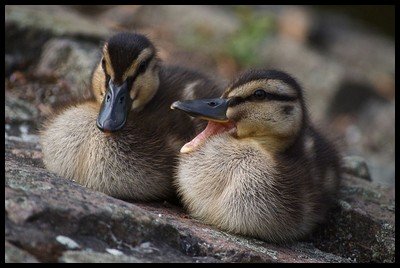

RAISING DUCKS and some Questions and Answers
Ducks live for a number of years, but of course that can differ from species to species and whether they live in captivity or in the wild. On average, however, a duck will live around 15 years.
A Pekin duck will live 9-12 years, a Mallard 15-20 years and Muscovy ducks 10-20 years.
How long do duck eggs take to hatch?
For most ducks, your eggs will take 4 weeks to hatch. This is the time where ducks appreciate water where they can frolic in, as the moisture from their feathers seems to be important for egg setting. If you are keeping Muscovies, Muscovy ducks take 5 weeks to hatch.
What do baby ducks eat?
Ducklings, or baby ducks should be fed a commercial duck starter which should be pelleted rather than given as a mash. They can also be given fruit and vegetable scraps but these must be cut up really small for the ducklings. They also enjoy insects and worms. Do not feed them onions, rice, whole grain, dry bread or wild or caged bird seed.
Protein is a very important part of a duck's diet for healthy growth. When you give your ducklings a starter feed make sure that it has a protein content of at least 20% for the first 3 weeks of their lives.
Adult ducks still need protein in their diet, but only 16%. Laying ducks need 18% protein.
What is a group of ducks called?
If ducks are on the water they are known as a raft, a paddling or a bunch of ducks. If ducks are in flight they are known as a brace, a team, a bed, a flight or a flock of ducks. You can also get a badling of ducks.
RAISING DUCKS and Duck Breeds
There are many types of duck breeds about and as a novice duck owner-to-be you are probably overwhelmed as to which duck breed will best suit. Ultimately, your choice when raising ducks, will come back to the question you should be asking yourself, right from the start; "Why do I want to keep ducks?" Do you want ducks for eggs, ducks for meat or ducks for snail and fly catching?When and Where to get your day-old Ducklings
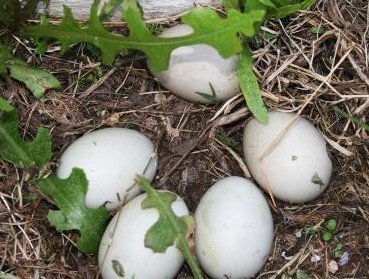 If you want to raise ducks for meat then you
would need to decide on
the number of ducklings you will need to buy for your operation.
If you want to raise ducks for meat then you
would need to decide on
the number of ducklings you will need to buy for your operation.But on a small-scale, getting in 1 dozen ducklings 3 times a season you could start eating duck from mid-June through to late fall.
Ducklings are hardy to raise, and need 3 weeks of artificial heat before you can put them to pasture.
If your duck lays eggs and leaves the nest, you can put them under a broody chicken, as long as the eggs haven't been left for too long. However, due to the large size of the duck eggs a chicken can only comfortably sit on 7-9 duck eggs. You will need to make sure that the eggs are sprinkled with water regularly, especially towards the last few days.
Duck Breeds for Eggs
Some will say that the Campbell (Khaki) duck is the better layer, but they are probably even in egg production. The Campbell is a placid bird with fair mothering instinct, whereas the Indian Runners are a little nervous but make excellent mothers.
Duck Breeds for Meat
Pekins are the fastest growing bird out of the 4, although don't weigh as much and Pekins and Aylesburys are the only 2 breeds that produce white meat. However, neither Pekins or Runners make good sitters, and you are probably better off with Muscovy ducks or Aylesburys, my personal favorites, as they are good dual purpose birds. Muscovy drakes will weigh 4.5 kg at maturity, and females will weigh 3 kilos.
Another reason why I like Muscovy ducks is
that they don't quack,
and so therefore the perfect bird if you live in the suburbs and you
are worried about annoying your neighbors. However, they are a bit
flighty, so it is prudent to clip one of the wings regularly.
Just remember to keep the right ratio of ducks to drakes if you are breeding ducks. One drake to 2 ducks to start with or one drake for every 5 or 6 ducks will keep him happy.
If you do keep ducks for meat, make sure that you like duck! Even 1 duck can hatch 25 - 30 ducklings in a season, as they hatch ducklings twice a year. If it is your aim to raise ducks for meat then you will be provided with tasty duck meat from spring until late fall.
You can start slaughtering
your ducks
after week 9 or 10.
Usually but week 10 they are fat enough, but you will need to determine
this by examining your ducks carefully. There is no point at
slaughtering at this age if they don't have enough meat on the bones.
However, something else to consider here is that at about this time
your ducks will start to moult. No matter how much you feed them after
this period, they won't put on much weight and whatever weight they do
gain will be done very slowly.
If you are allowing your ducks just to
forage for
food without any additional feeding your ducks will take a lot longer
than 9 or 10 weeks to gain weight for slaughter.
Duck Breeds for Eggs and Meat
If on the other hand, you are raising ducks for both meat and eggs, the dual-purpose Aylesburys win hands down, producing about 170 eggs a year and have the advantage of having a placid nature too. However, Orpingtons, Blue Swedish, Muscovies, Saxonys, Cayugas, Appleyards and Crested ducks can also claim the title of good dual-purpose birds.
Small Duck Breeds
Another factor for raising ducks and choosing a duck breed will be based on how much space you can offer your ducks. If space is a premium then you should be looking at smaller breeds like Elizabeth ducks, or the Black East Indian Ducks. There are also bantam ducks now, the Silver Appleyard is one such example, as is the Miniature Crested duck.
A word of warning about bantams - because of their light weight they are great fliers and any new birds should be either clipped/pinioned/ or placed in a covered pen until they settle. They are also best bought as pairs as single pet females often fly in spring to find a mate. It is wiser to buy them as ducklings. As they grow up in familiar surroundings they are less likely to fly away as adults.
RAISING DUCKS and What to feed your Duck
Ducks are great foragers and are quite happy to eat the snails, flies and bugs in your garden. Unlike raising chickens, when you raise ducks they won't destroy your flowers or your vegetables if you let them loose in your garden, although they may nibble at your new pea shoots and seedlings and other leafy crops. So don't put them in your veggie gardens if you don't want them to eat your new lettuce and spinach seedlings.However, if you can put up with that, the advantages of having them there in your veggie patch eating cutworms, caterpillars, slugs and snails far outweighs the slight damage to your vegetables by having them there. In addition, they will be leaving behind their manure which is high in nutrients and nitrogen which will go back into the soil.
Ducks will also have a go at eating any fallen fruit in your orchard and this is a good thing too, because any fruit flies that may think of laying eggs will soon be preyed upon by your resident ducks.
You may also like to suppliment their diet with chopped tomatoes, hard-boiled eggs and earthworms.
However, foraging for food is not enough for a duck if you want it to be a good layer, and to be a fat bird for your table. You will need to feed your birds twice a day; early morning and late afternoon.
Give each adult bird 180-200g of a good grain mix. This can consist of corn, wheat, barley and flaked oats. All will be warmly welcomed by your ducks. From time to time add cut up spinach and leafy greens to their diet if they are not getting that already from your veggie patch. Stale bread can also be given as a treat from time to time.
RAISING DUCKS and The Importance of Water
Ducks are waterfowl and need a pond or a bath of water to dip themselves into every day. In fact, ducks spend about 80% of their time on water and those that don't have access to water start showing abnormal behavior. Not only that, but a duck that doesn't have access to water to clean its eyes on a regular basis will go blind. So raising ducks successfully means that you will have to give them access to a small pond or the like.Make sure that they have enough water to swim and play in, and where possible it should be cleaned out once a week and filled up again with clean water. Sinking an old plastic clam sandpit that your children have out grown is one way of recycling and providing water for a couple of ducks.
However, any pond built for your ducks must be constructed in such a way that all ducks and ducklings can get out easily. Therefore slanting the clam sandpit slightly allows for the ducks to get out safely. If ducks are unable to get out of the pond that you have created, they will tire themselves in trying to get out, and will in fact drown.
Drinking
water for
ducks must be provided at all times, and kept clean. Ducks like to put
their whole bills into the water to drink, and therefore the water
needs to be at least 4 inches deep for adult ducks and at least 12
inches across.
RAISING DUCKS and Good Housing for your Ducks
Foxes are a duck's worst predator and your duck houses should be constructed in such a way that your ducks will be safe at night. This means that any fencing should be high enough to prevent a fox from jumping over or even climbing over - yes foxes can climb fences! And the fence should be buried at least 15-20 cm below the soil line to prevent him from digging his way into the duck pen.The duck house should be sturdy, well-ventilated but not draughty. It should be water-tight and the opening should be facing away from the prevailing weather. Litter should be placed on the floor and removed once a month and included in your compost heap. Nesting boxes can be placed whereby they can be opened from the outside, which is very convenient for those collecting the eggs. Unlike chickens, your ducks do not need perches.
RAISING DUCKS IN A HEALTHY WAY covering Duck Care, Illnesses and Diseases
Your birds should be housed in sanitary conditions that are well-ventilated but not draughty. They must be released from their duck house every day. These should be cleaned weekly. Like all birds they can also be susceptible to mites and worms, and should be treated for these accordingly. Any serious illness should be attended to by your local vet.
Raising ducks is a rewarding experience, and if you are into permaculture, they are a vital player in your farm's ecology. They eat the snails, slugs and other nasty bugs in your veggie garden without destroying your greens. In addition, they provide great farmyard manure to enrich your soil. Depending on the breed, you will be provided with a clutch of duck eggs on a regular basis, and a bird or two will grace your dinner table from time to time.
The humble duck is a very worthwhile farm animal indeed!
Duck Breeds
RECOMMENDED BOOKS ON RAISING DUCKS
You can Add your Comments on Raising Ducks!
We have lots of pages where you can contribute to throughout this website. We love hearing from our readers, and hope you will be one of those we hear from too. Look around our homesteading website. If you have a comment to make about raising ducks, please submit them. All you need to do is type and submit. We will do the rest!
Leave a Comment
Do you have anything that you would like to add after reading this page? We would love to hear your thoughts. If you can add additional information to what has been written here you will be adding value to the website! No need to have any special skills - just type and submit. We will do the rest!
Other Comments
Click below to see comments from other visitors to this page...
The Ethics of Raising Animals to Eat 
Good but no-one wants to eat duck. They need to be loved & I could never eat my duck after all I was there when he hatched so I'm imprinted on him.
…
Choosing ducks for cold climates
I live in Canada. I am in a gardening zone 3/4. What is a good duck for this area. Which is best for eggs? And which is best for eating?
Winters consist …
closed eye in duck
I have just got home to find my Aylesbury duck with one eye closed she seems very well in her self I have just tried as well as I could to bathe it with …
Sexing Pekin Ducklings by Bill Color
I've been told that the color of a Pekin duck's bill can indicate its sex. However, I did't get what color for what sex!
I have 4 Pekin ducks. One …
What is the average clutch size for pekin ducks
What is the average clutch size for pekin ducks?
Rouen, Khaki Campbell and Indian Runner Ducks Not rated yet
I have Khaki Campbell, Rouen and Indian Runner ducks.
My experience is the Khakis and the Rouen lay better. The Rouen lay larger, white eggs whereas …
duck stop laying Not rated yet
I have 2 ducks that are a year old and were laying all last summer and winter but they have not laid for 3 months now.
Can you tell me what the reason …
How do you stop a pond from freezing over? Not rated yet
My pond freezes over each year from late November to March. I would love to raise Pekin or Aylesbury honkers, but how can I keep my pond open or employ …
Duck lost eye Not rated yet
Our 4 year old Pekin 4h duck has lost its eye some how. Will it live and how can I help it?
*****
Sorry to hear that your Pekin duck has lost …
Duck Breeds in Malawi Not rated yet
I live in Malawi Central Africa.I have learned a lot of things about keeping ducks from reading this article. However I need some clarification on differentiating …
Follow Us: Facebook, Twitter, Google+, Pinterest, RSS
 |
 |
 |
 |
 |
Don't miss out on our latest news and articles. Sign up for our free monthly e-zine!


OTHER SECTIONS OF INTEREST
 Pekin
Ducks
Pekin
Ducks Indian
Runner Ducks
Indian
Runner Ducks Farm
Animals
Farm
Animals Self-Sufficient
Living
Self-Sufficient
Living
Homesteading Today
New! Comments
Do you have something of value to add? Leave me a comment in the box below.