A Square Foot Gardening Layout and Great Tips for Garden Designs
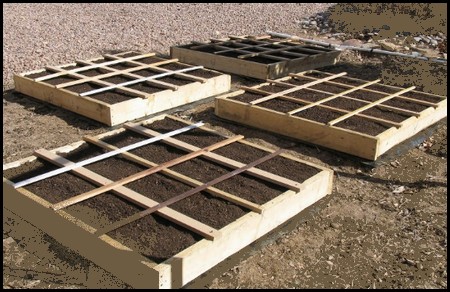
Square foot gardening needs planning in layout and design, but a square foot garden using raised bed gardening methods will have more vegetables, in less space, with half the effort.
Mel Bartholomew is a man who has been attributed to creating a different method of growing vegetables and flowers, and that is not in rows, but in squares. Thus, the term Square-Foot Gardening, or for some, squarefoot gardening. However there is far more to this way of planting other than how you plant your plants.
To quote Mel about his square foot method of gardening he says, "Square Foot Gardening is a new way to garden, in less space, with less work."
What is Square Foot Gardening?
- Plants are planted in squares rather than rows.
- The layout of a square foot garden means that the squares are in multiples of 12 inches x 12 inches - the total measurement being 1 square foot.
- The squares are designed so that you never have to stretch more than 2 square feet to reach your plants.
- As a result, you never have to walk on your garden, which prevents the soil from becoming compacted.
- Once your beds have been created, there is no need for any further cultivation.
- The number of plants per square foot will vary due to size and spread.
- Crop rotation and companion planting are to be encouraged.
- All climbing plants are trellised, further optimizing the use of space.
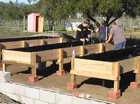
- It is a popular concept for raised bed gardens, especially for those who don't want to bend all the time.
- The sets of squares are separated by pathways.
Square Foot Gardening Versus Conventional Gardening
Square Foot Gardening: Getting Started - The Soil
The soil composition proposed is 1/3 vermiculite, 1/3 peat moss and 1/3 compost. Vermiculite is preferred over perlite which may be cheaper but it does not absorb as much moisture, keeping your soil moist for longer, and it also floats up to the top of the soil when you water your garden, making it look unsightly.
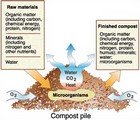
The composition of the compost is important too. Most commercial bags of compost are only made up of one or two ingredients. To grow great fruit and vegetables you need at least five different composting materials. Therefore, it is advisable to buy five different types of commercial compost and mix them, or the best solution would be to make your own in your own backyard from vegetable scraps, grass clippings, leaves and farmyard manure. You can make compost very quickly. See our article on compost making using worms and making compost bins for storage.
The depth of your boxes and soil would be fine at 6 inches. The richness of the soil mix provides all the necessary nutrients for your plants and therefore there is no need for further depth to your soil.
Square Foot Gardening: Placing a Permanent Grid
This grid can be made out of strips of wood, doweling etc. and can be left on your frame throughout the year. With the grid you will be planting according to the squarefoot gardening method, without it, you will be tempted to go back to planting in rows.
Square Foot Gardening: Planting the Seeds
However, no one family would ever end up eating more than 4 lettuces a week. So what one needs to do is to validate what you plant, and make sure that you plant successively to extend your harvesting season. This is done by planting another 4 seeds a week or two later. That way you can eat what you plant, without ending up with a glut.
The essence of the square foot method is that when you plant your seeds you space them according to the final thinning spacings on the seed packet. So if the seeds should be thinned out at 5 cm each, this is where you plant each seed, and only one seed, and they are placed in the square foot and planted the same distance apart in all directions.
Square Foot Gardening: How Many Seeds Per Square?
16 squares a grouped together forming a 4 foot by 4 foot block, thus allowing accessibility from all sides, and preventing the need to trample through your veggies to weed and maintain them. With an average of 8 plants per square foot, this means that with a 4 foot x 4 foot frame you would be planting 130 plants.
Square-Foot Gardening: So What can you Plant in Each Square?
SMALL PLANTS FOR YOUR SQUARE FOOT GARDEN:16 radishes |
16 carrots | 16 onions | 9 bush beans |
9 spinach |
9 beets | 9 garlic | 8 peas |
4 Swiss chard |
4 lettuce | 4 parsley | 4 thyme |
LARGE PLANTS FOR YOUR SQUARE FOOT GARDEN:
| 1 cabbage |
1 broccoli | 1 cauliflower | 1 green pepper |
| 1 red pepper |
1 eggplant | 1 potato | 1 corn |
VERTICAL PLANTS FOR YOUR SQUARE FOOT GARDEN:
| 1 tomato |
2 cucumbers |
1 musk melon |
8 pole beans |
Square Foot Gardening: Planting to Extend the Harvest
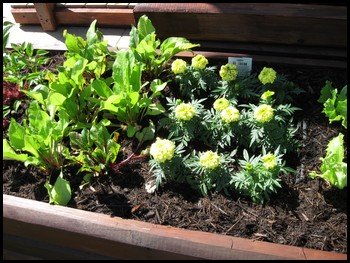
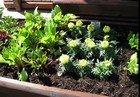
Square Foot Gardening: Companion Planting
Buy your own Square Foot Raised Bed Garden Kits
Click on each of the pictures for prices and details.Books on Squarefoot Gardening
We hope that this has given you some insight into Mel's concept of creating a square foot garden, and something for you to try next time you get into that veggie patch of yours. For more information you can buy his book through our Best Selling Books
You can Add your own Comments on Square Foot Gardening Here!
We have lots of pages where you can contribute to throughout this website. We love hearing from our readers, and hope you will be one of those we hear from too. Look around our homesteading website. If you have some additional ideas or comments on Square Foot Gardening of your own, please submit them. All you need to do is type and submit. We will do the rest!
Leave a Comment
Do you have anything that you would like to add after reading this page? We would love to hear your thoughts. If you can add additional information to what has been written here you will be adding value to the website! No need to have any special skills - just type and submit. We will do the rest!
Other Comments
Click below to see comments from other visitors to this page...
Dad's Square Foot Garden Not rated yet
My Dad and I would spend weekend mornings watching Square Foot Gardening on TV. That was thirty plus years ago. He swore by the method and the garden …
Square Foot Gardening is a Great Way of Gardening! Not rated yet
Hello!
As for the square foot gardening, all I have to say is that it's a great system.
I tried gardening for many years but desisted do to weeds, …
Don't miss out on our latest news and articles. Sign up for our free monthly e-zine!


OTHER SECTIONS OF INTEREST
 Grow Vegetables
 Growing Vegetables in Containers
 Raised Bed Garden
 Companion Planting
 How to Make Compost
Self Sufficient Living
New! Comments
Do you have something of value to add? Leave me a comment in the box below.