Bantam Chickens, Breeds, Diseases, and How to Care for Bantams
You can soon make room for a few where you can tend to them and breed them, although it is a little difficult to do, and these little chickens will produce many hours of fun just watching them. And these days, you can find most of the large chicken breeds that have been breed as bantams. However, there are also true bantam breeds, which don't have a larger relative.
What is a True Bantam Breed?
True bantam breeds are naturally occuring small birds which have no similar types in the larger breeds.There are also bantams which have been bred small from the larger breeds, which are not really true bantams, but are now recognized as bantam breeds because they have been around for a long time. These are miniature versions of the larger poultry, but not true bantams.
Then there are developed bantams. Again these are not true bantams but rather types of chickens that can only be found as bantams, and are now recognized as bantams as they have been around for a long time.
Why Keep Bantams?
Bantams are usually kept either for ornamental or exhibition purposes or kept as pets as bantams are ideal calm birds for children to keep. Being a small chicken breed they are ideal for small backyards.For some people bantam chickens are seen as useless, from the fact that there is not very much to eat on a bantam that at best, would not exceed more than a pound in weight. However the bantam chicken has meat which is rich and delicate, and their eggs, though small, are truly delicious.
The other good thing about keeping bantam chickens is that although they eat the same food as standard chickens they eat half as much, so bantams are a very economical type of poultry to keep, especially if you are urban-farming. Bantam chickens will eat about a pound of commercial poultry food in a week, excluding table scraps, which isn't much at all.
How many Eggs will a Bantam Lay?
Depending on the type of bantam breed that you have, if you have a bantam version of good layers, such as the White Leghorn, you can expect your bantam leghorn to lay as many eggs per week as the standard breed. However, bantam laying capacities vary as much as standard chicken breeds do.
Size of Bantam Eggs
Because the bantam hen is a lot smaller than the standard hen; a quarter of her size, it stands to reason that the eggs will be smaller. This should be remembered when using these eggs for baking purposes and people often wonder how many bantam eggs make up 1 standard chicken egg. Usually, depending on the size of your eggs you would use 2 bantam eggs in place of 1 standard egg, and 3 bantam eggs instead of 2 standard eggs.
Bantam Chicken Breeds
The True Bantam Breeds
* Nankin* Rosecomb
* Rumpless
* Sebright
* Tuzo
Developed Bantam Breeds
* Booted* Frizzle
* Pekin
* Japanese
* Belgian Bearded
* Old English Game
Miniature Bird Breeds
* Ancona* Araucana
* Australorp
* Leghorn
* Maran
* Light Sussex
* Rhode Island Red
These are down scaled versions of normal poultry that have been bred for bantam sized proportions.
The Sebright Bantam
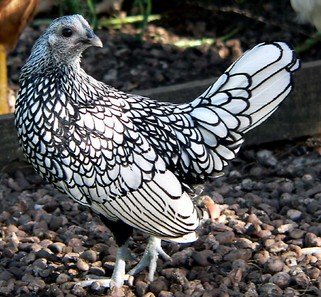 The
prettiest of the bantam chicken breeds is the Sebright
bantam, raised
and
produced by the late Sir John Sebright.
The
prettiest of the bantam chicken breeds is the Sebright
bantam, raised
and
produced by the late Sir John Sebright.
There are two types of Sebright bantams; the gold-laced and the silver-laced bantam. The former have, as their name indicates, a pure golden color; the latter, a white, approaching French white.

A Silver-Laced Sebright Bantam
Picture courtesy of Mark Robinson, UK
Each feather of the bantam chicken is as distinctly marked, or at least should be, with a lacing or edging of black, as if the painter had been called upon to exercise his art and add to the already beautiful appearance of the bird.
The bantam cock (pure) throws his head back with such apparent pride in himself and disdain of others, that his little head, surmounted by a rose comb, nearly touches his squarely-cut tail. The wings also, instead of being firmly fixed to the body as in other descriptions of poultry, hang loosely, in a sort of jaunty manner, until they nearly touch the ground. Sebright Bantams have blue legs but one can scarcely see them for their wings.
With regards to personality the Sebright Bantam chicken is very pugnacious, and they have a lion's spirit in a very small body.
The Pekin Bantam
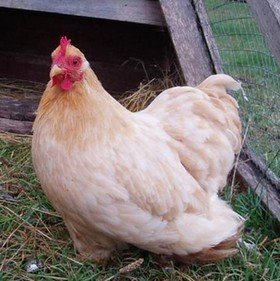 Pekin
Bantams are also known
as Cochin
Bantams.
Pekin
Bantams are also known
as Cochin
Bantams. Pekin bantam hens are lovely docile birds that make excellent pets for children, although the males can be fairly aggressive. They make good sitters as they are often broody.
These bantam breeds have a round, rotund figure and tilt as they walk which is very characteristic of this bantam breed.
The range of Pekin colors is extensive, including black, white, buff, lavender, and red. There are 17 standard colors including
A female Pekin bantam -Photo courtesy of Michael Romanov.
barred, birchen, mottled and splashed. Pekin Bantams are the most fully feathered of all the bantam chickens and even have feathers on their feet and toes. This can be a problem, especially in wet weather as their feet and legs get very dirty.
The lifespan of Pekin Bantams is about 4-5 years and are generally healthy birds but still needed to protected against against mite and lice infestations and other poultry diseases. They will lay eggs every second day for about 6 months and then they will start moulting.
The Game Bantam
Black and White Bantams
White Bantam
See our page on chicken breeds for non-bantam chickens.
Keeping Chicken Coops Clean
Bantam chickens, like ordinary chickens, are subject to various diseases, caused either by improper feeding or lack of cleanliness, both in their houses, their runs, or their water, and in some measure, to our variable climate.
Bantam chickens in pens, even kept scrupulously clean, are sometimes subject to various illnesses and a bird may be lost even when there are no real symptoms that would allow you to treat these diseases even if you are skilled in poultry management. See more information on our page natural home remedies for sick chickens.
Illness through Over-Feeding Chickens
Chicken Diseases
The Pip (Infectious Coryza) in Chickens
Pip is easily discovered by the appearance of the tongue of the chickens, which thickens, as does the palate, which causes a difficulty in breathing, and makes the chickens gasp as if choking. You find your bantam chickens unable to eat, their feathers become ruffled, the fowl pines, and at last dies.
The remedy for the pip, which has generally proved successful is to place the chicken in a warm place; give it clean wholesome food of bread and milk, fresh vegetables chopped small, with some boiled potatoes mixed with oatmeal, all blended well together, and plenty of pure water. A little castor oil (always a safe medicine) may be given; and if a tooth-wash, composed of borax, myrrh, and water, is at hand, dilute some and apply it to the tongue and palate. A homemade recipe for pip is made by dissolving two ounces of borax in three pints of water; before quite cold, add to it one teaspoonful of tincture of myrrh.
On no account remove the thickness from the chicken with a nail, or in any forcible manner. With care and attention to this treatment you may save, in almost every instance, your chicken from death and attacks of the pip. However, transmission is bird to bird within a flock and although your bird may recover, recovered birds remain carriers.
Gapes (Syngamus Trachea) in Chickens
You can try several remedies, and in most cases with success. The first thing to be done is to remove those affected from the remainder of the stock; place them in a dry, warm room, and, taking each bird separately, puff tobacco smoke down its throat. This causes expectoration, and in many instances causes the worms to be dislodged. You can also try gin, or, if not at hand, a little spirits of turpentine, mixed with their food, and made into pills.
Another remedy to try and remove the worms is using and oiled feather (sweet oil with a little clove oil) then add 3 teaspoons of salicylate of soda to 1 quart of drinking water. Or finally, use a feather dipped in mixture of 4 drops eucalyptus oil to 1/2 pint castor oil to remove the worms.
A preventative measure against gapes is to add some chopped garlic to their water. This is an excellent natural way of keeping worms in bantam chickens, or any kind of poultry, away. Also lime and white wash the infected areas and plow infected areas that the chickens are exposed to and plant with rye.
Where poultry are not properly fed, or if the chicken house is not properly ventilated, or if the house and run be not kept scrupulously clean, and if attention is not paid to giving a good supply of grit, gapes will prove the cause of a very swift decrease in your stock of poultry.
Inflammation of the Lungs in Chickens
Fowls suffer as much from moulting as from any complaint they are subject to, as may be imagined from its causing an entire change (gradually though) of their plumage. During this change you can expect no eggs; and while the process is completing itself they must be kept warm, given a generous diet, and above all things clean water with a rusty piece of iron placed in it.
Pills made of cayenne-pepper and meal should be given to them in addition to their food as this will add a little warmth to their system. If they appear to be suffering a lot, as chickens frequently do, a little chopped meat and parched corn may be given as part of their food.
Conclusion in Keeping Bantam Chickens
Other Resources for Keeping Bantam Chickens
We have other pages that may be of interest. We have several pages on free chicken coop plans for a chicken ark, and another chicken coop plan for a 8 x 8 wooden chicken house.Did you find this page helpful?
Sharing is a way of saying, "Thanks!"
Follow Us and Keep Up to Date
Go to Chicken Breeds
Go to Feeding Chickens
Go to Cleaning Chicken Pens with Fire
Go to Backyard Chickens
Go to FAQ Raising Chickens
Go to Butchering Chickens
Go to Caponize Chickens
Go to Coccidiosis in Chickens
Go to Natural Remedies for Sick Chickens
Go to Self-Sufficient Living
Go to Chicken Recipes
Go to Farm Animals
You can Add your own Comments about Bantam Chickens!
We have lots of pages where you can contribute to throughout this homesteading website. We love hearing from our readers, and hope you will be one of those we hear from too. Look around our homesteading website. If you have some comments on Bantam Chickens of your own, please submit them. All you need to do is type and submit. We will do the rest!
Leave a Comment
Do you have anything that you would like to add after reading this page? We would love to hear your thoughts. If you can add additional information to what has been written here you will be adding value to the website! No need to have any special skills - just type and submit. We will do the rest!
Other Comments
Click below to see comments from other visitors to this page...
Can we clip chicken feet feathers? 
Hello...I have two pet Pekins in the garden and due to the wet weather this year they have got very dirty trousers on their feet.
We tried cleaning …
Discolored toe in Bantam
I have just purchased 3 Seabright bantams,one of my girls has a discolored toe. It's charcoal/brownish and a little irregular from her other toes. The …
Rusty iron in the Chicken Drinking Water
What's the purpose of the rusty iron in the clean water?
Please coulld you explain more?
**
Putting rusty iron in the chicken's drinking …
what breeds are best to mix with sebrights? Not rated yet
We have 2 sebrights and would like to know if they can mix happily with other chicken breeds as we have 10 others as well.
****
Wayne, it …
Booted Bantams Not rated yet
I have 3 booted bantams that have moved with me 3 times over the 4 years I've had then. Never a day of illness, fun, happy and sometimes quite cuddly. …
unending crowing Not rated yet
I have a bantam rooster that crows constantly. He also walks backwards a lot. Is this normal?
***
It is not normal for chickens to walk backwards …
Fine yellow dust / powder in hen house Not rated yet
The floor of my hen house is covered in a fine yellow dust / powder. What is this???
****
It is dander that comes from your chickens as a result …
Thank you for your articles ! Not rated yet
I found your articles very helpful. Thank you! I learned a few things not mentioned in other articles.
My Dutch booted bantams Not rated yet
Hello,would like to say what an informative site.I have three lemon millefleur sablepoot pullets and one cockerel and they are great little birds with …
Don't miss out on our latest news and articles. Sign up for our free monthly e-zine!
NAVIGATION COLUMN
Find us on Google+Country Shopping
Country StoreFree Stuff
Free MagazinesHomesteading Blogs
Country Living Blog Gypsy's WanderingsCountry Living
Country Home Country Living Country Crafts Country HolidaysCountry Real EstateCraft ForumPicnics CampingSelf-Sufficiency
Self-Sufficient Living Organic Gardening Do It Yourself Easy RecipesHomesteading
Homesteading Today Homesteading Q & A Homestead Animals Urban Homesteading Homestead DirectoryGoing Green
Green LivingFarms Around the World
South Africa United Kingdom United States Canada Central America Australia New Zealand Europe Farm Photos Farming Articles True Farming Stories Farms for Sale Organic Farm ProduceMiscellaneous
Guest Book Search Site Survey Advertise with Us


OTHER SECTIONS OF INTEREST
 Raising
Chickens
Raising
Chickens Chicken
Breeds
Chicken
Breeds Caponize
Chickens
Caponize
Chickens Chicken
Coop Plans
Chicken
Coop Plans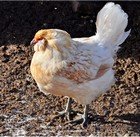 Sick
Chickens
Sick
Chickens 
Feeding Chickens
Chicken eBooks and Information

Click Here

Click Here
Make an Incubator

Click Here

Click Here
Raising Chickens Bonanza

Click Here
New! Comments
Do you have something of value to add? Leave me a comment in the box below.