Growing Blueberries Successfully in your own Backyard
Growing blueberries is easy when you know how. Learn how to grow blueberries with the right soil, growing conditions and how to prune. Soon you will have a steady supply to an excellent fruit that has high antioxidant properties. In fact, blueberries have now been classed as one of the top super foods available for maintaining good health.
Growing blueberries is successful in cold conditions as they are mountain fruit.
Here you will find information on:
- Growing blueberries successfully
- How to grow blueberries with the right soil conditions
- Know the right growing conditions for blueberries
- Learn how to prune blueberry plants
- Learn how to harvest blueberries
- Learn how to store blueberries after harvest
Growing blueberries successfully really depends on where you are and what your climate is like. Blueberries are extremely hardy and insect-resistant and thrive in cold climates, but growing blueberries are no good for the tropics. As long as you have an acidic soil, and it is moist but well-drained, your fruit will be happy and crop for you.
However, blueberries take a while before they reach maturity - 7 years in fact, and will only start bearing fruit in the 2nd or 3rd year. So if you are looking for a quick growing fruit to grow, it is not this one.
You will also need to have a lot of space to grow blueberries.
Growing Blueberries - The Right Soil Conditions for Growing Blueberries
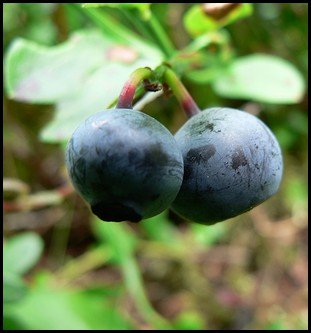
As already mentioned, when growing blueberries they like to have an acidic soil to grow in, and it should have lots of compost and humus.
| A good tip to growing good blueberries is to add lots of peat to the soil where you will plant the blueberry plants, and then when you mulch your plants during the growing season, mulch again with peat soil. This will give you the acidity that you need to grow beautiful blueberries. |

A pH
of 4.5 is ideal, but a pH
of 4.0-5.5 is an acceptable range. They also like moist
soil but not soggy soil, so it should be well-drained.
To keep your blueberry plants happy mulch the area around the plants with a 10 cm layer of either peat moss or composted oak tree leaves. Both of these will leach acidity back into the soil when they start breaking down. In addition, the mulch will keep the moisture in, the weeds down and reduce.
Check the pH of your soil every year when growing blueberries. If it gets above 5.5 apply ground sulfur at a rate of 25g (1 oz) per plant, either raked or watered in. As blueberries are shallow rooted plants, take care with the raking so that you don't damage the root system.
If you don't get the acidity levels in your soil when growing blueberries the plants will be slow to grow and they won't bear many berries. Try adding spagnum moss to get the soil down to 4.0 - 5.5. Adding pine needles, composted oak and sumac leaves, and cottonseed meal can also raise the acidity levels in your soil.
Growing Blueberries in Containers
If you don't have acidic soil and you still want to grow blueberries the answer is to grow blueberries in containers where you can control the acidity levels better. To get the right soil for blueberry growing mix the following up:
- 3 parts sand
- 3 parts spaghnum moss
- 2 parts acidic leaf mold (pine needles, oak leaves, sumac leaves etc.)
Growing Blueberries - Where and When to Plant Blueberries
Your blueberry plants will grow very tall and very wide. Therefore, when you lay out your beds you will need to leave a space of 1.5 -1.8 m between each plant in the row and 5 m between each row. Your plants will grow in a cone-shape being wider at the bottom than on the top.Grow blueberries in a sheltered position. Ideally, they will be screened from trees on one side so that they get the morning sun but the afternoon shade. However, if you try and grow this fruit in deep-shade the plants will not flower very well, therefore your crop will be poor.
Blueberries are not self-pollinating, therefore you will need to plant more than one variety. However, the advantage of this is that the different varieties will crop at different times, thereby extending your harvest.
Growing Blueberries - Looking after your Blueberries while they are growing
Once established your blueberry plants should receive regular applications of compost and mulch and watering. Watering is especially important in the summer for good formation of berries. Their greatest need for water is when the fruit is reaching maturity.As the blueberry plants grow get into the habit of nipping off the ends of the branches to encourage your plant to bush out and spread.
Every spring the plants should be given an application of manure and compost. During the flowering period an application of a seaweed fertilizer should be sprayed on the leaves to encourage fruit setting.
Growing Blueberries - Pruning your Blueberry Plants
The reason for pruning blueberries is to allow light and air to circulate through the plant and this is done by cutting out the slender center stems that do not bear much fruit, as well as the older stems that have been bearing fruit for several years. Pruning is done during the spring.After 2-3 years of growth take out the center stems.
After 4-5 years of growth your blueberry plants will need to be pruned. The older branches can be cut back to about 30-40 cm to encourage new growth. Also cut out any deadwood.
Growing Blueberries - When to harvest your Blueberries
The berries grow in clusters of 5-10 and they ripen in the summer over a period of 3-5 weeks. You should be getting about 8 kilograms of fruit off each mature tree.Your fruit will turn blue, however, it is best to leave it on the trees until it turns black. Picking it later will allow the fruit to develop more flavor. However, this is also the time when not just you are wanting the fruit. Birds are your worst pest when growing blueberries, but especially at this time and you may need to protect the crop from the birds by putting up some netting.
Remove the berries by by using your thumb and forefinger. Roll the berry off the cluster and into your hand without squeezing it. Place it in a container, preferably tied around your waist so that you have both hands free.
Growing Blueberries -Storing Blueberries
Once your blueberries have been picked you can eat them with yogurt for breakfast, make them into muffins, jam or turn them into desserts or country wine.When storing blueberries, place them in an air-tight container and place them in your fridge where they will keep for a week or more.
We hope that next growing season you will be successful in growing blueberries on your property now that you know how!You can Add your Own Comments and Pages on How to Grow Blueberries!
We have lots of pages where you can contribute to throughout this homesteading website. We love hearing from our readers, and hope you will be one of those we hear from too. Look around our homesteading website. If you have any comment, additional information or questions on how to grow blueberries please write to us below.
Leave a Comment
Do you have anything that you would like to add after reading this page? We would love to hear your thoughts. If you can add additional information to what has been written here you will be adding value to the website! No need to have any special skills - just type and submit. We will do the rest!
Other Comments
Click below to see comments from other visitors to this page...
sheep manure application 
Can you tell me something about application of well aged sheep-straw manure. Is late fall or spring good time to spread and cover it with sawdust? How …
Great information on Growing Blueberries
I have learned a lot. Your information is very detailed and informative.
I live in the U.S. and the Algarve, Portugal,(Retired). I have about three …
GROWING BLUEBERRIES - your information above is very helpful. Not rated yet
I'm in the Newcastle area in Australia. My only tree is very small so now I have to get another one but I think the nursery said it doesn't need another …
Don't miss out on our latest news and articles. Sign up for our free monthly e-zine!


OTHER SECTIONS OF INTEREST
 Natural
Pesticides
Natural
Pesticides Garden
Pests
Garden
Pests How to
Make Compost
How to
Make Compost Gardening
Zones
Gardening
Zones Self
Sufficient Living
Self
Sufficient Living
Country Living
New! Comments
Do you have something of value to add? Leave me a comment in the box below.