Growing Beets from Seed, in Pots, Harvesting, Varieties, Pests
It is one of the most popular root crops, and is ideal to grow on homesteads or in backyards for self sufficient living, especially if you have difficult soils like clay or a soil with a high salt content.
Beets can be harvested as soon as the bulbs reach the size of a walnut, usually about 8 weeks after sowing your seeds making it a fairly quick growing crop.
Swiss chard, sugar beets and mangelwurzels also belong to the same species and they readily cross with each other. Because they are so closely related, it is best that when you do plant your beets out they don't follow any of the above in the same soil.
Planting Beets by the Moon
Know when to plant vegetables, as well as choosing the correct moon phase if you are planting by the moon.
If you are, make sure that you plant the beet seeds and do any transplanting during a full moon phase.
The Best Climate for Growing Beets
Beets are remarkably hardy and like to be grown in at least half-sun, and will tolerate light shade, but not heavy shade. In light shade they will ripen a little slower than those beetroots that have been planted in full sun.Where areas experience heavy frosts plant in spring. Start planting your seeds out from mid-April through to July making sure that you get a good spread of beets throughout the growing season, rather than having a glut of them all at once.
Otherwise, if you live in a temperate climate they can be planted from late winter to mid-autumn.
In warmer climates you can plant beets throughout the year.
This is not a heat-sensitive vegetable, providing they get enough water during the height of the summer. And again, they are resistant to cold weather, although during this time their growth will be slow.
If you grow beets during hot, dry weather and on poor soil, they will still look good above the ground, but below the soil their roots will be small, poor in color and in some cultivars they will have a white zone.
Growing Beets with other Companion
Plants
- Dwarf beans and Bush Beans
- Broccoli
- Brussell Sprouts
- Cabbage
- Cauliflower
- Lettuce
- Marjoram
- Onions
- Potatoes
- Silverbeet
Growing Beets - Soil Conditions
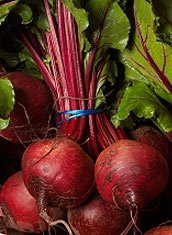 Beets like to be
grown in
soil that is loose, fairly sandy and which has been liberally sprinkled
with lime as they don't like an acidic soil.
Beets like to be
grown in
soil that is loose, fairly sandy and which has been liberally sprinkled
with lime as they don't like an acidic soil. 1/2 cup of lime per square meter is sufficient. If you are not sure, check the soil pH with a soil testing kit which you can find at your local gardening center.
However, beets will tolerate any soil conditions and will also grow well in clay and particularly salty soils which they seem to like.

Planting beets in ground that has been manured for a previous leaf crop such as cabbages or lettuce is perfect for beetroot.
To prepare the beds make sure that the bed has been dug over to a depth of 10 cm. Don't plant beets in a heavily manured soil, as you will find the beets will produce more leaves than roots, and this is not what you want.
Beets are extremely sensitive to baron deficiency in soils, and therefore are a good indicator of this. The indications are blackened areas and cracked roots and a generally withering beetroot occurs. Using a seaweed solution to bring up the pH levels in your soil to 6.0 - 7.0 will sort this out.
Growing Beets from Seed
Growing beets from seed is more successful than transplanting seedlings as they seem to suffer from transpant shock more than most. However, if the transplanting is done carefully they will survive and do well. It really is a hardy vegetable, however, transplanting the beets will result in retarding the growth of the plant for some time before it recovers.You need to soak the beet seed first, otherwise it will fail to germinate properly.
Pour soft, scalding water over the seed. Leave it the water for 3-4 days. Remove and dry the seed off before planting.
Sow the seed sparingly. Beet seed is unusual in that it comprises of a capsule containing around 3 seeds, thereby making it easy to over sow and ending up with more than you need or want.
In the morning, sow 1 inch deep, spaced at 4 inches apart. Rows can be spaced 6 - 10 inches apart.
If you are planting beetroot seed per acre, you will need to sow 6 pounds of seed per acre and plant in drills at 20 - 24 inches apart.
Cover the seeds with fine soil, and press done gently making sure that the seeds make contact with the soil. Water in gently with a fine spray. Keep the soil moist by watering every day.
During hot weather grass can be laid thinly over the rows as a temporary mulch to prevent the soil from drying out and crusting. Remove the grass immediately as soon as the seedlings begin to emerge. Seeds should germinate within 10-14 days. They will take 10-12 weeks to mature.
They will need to be thinned out once they are about 4 inches high. Make sure that you thin out by giving each root plenty of space to grow, but make sure that when you pull out the excess plants you don't disturb the soil too much around those roots that you are intending to grow.
Growing Beet from Seedlings
If you are growing beetroot to transplant out at a later stage the plants can be moved to their permanent beds when they are 8 - 10 cm high, and should be set out apart with 7.5 cm between the rows. If you trim 1/3 off the foliage at this stage, this will help with the transplanting out and cause the plant to grow better.Cultivation of Beets
Always make sure that the soil never dries out because if it does the crop will be woody and unpalatable. Your beetroot will also become woody if you don't thin the seedlings out as they grow. No matter how careful you try to be when sowing the seed you will invariably end up with rows that are overcrowded. If you don't thin them out there will be no space for your roots to develop and then only best for using the crop for their foliage.
The first thinning out should take place when growing beetroot when the plants are 3 - 4 cm high, followed by a second thinning out, if necessary, when the plants are 7 cm high, making sure that there is at least 7.5 - 10 cm between each plant. Drawing the soil up around the plants will give them extra support and will be welcomed by your beetroot plants.
Growing Beets in Pots
Growing beetroot in pots and containers is possible as long as you have enough depth of soil in the pots that will allow the root to develop properly.One mistake that people make is planting too many plants in the small confined pace. When planting beetroot you have to take into consideration that the roots will swell as they grow so don't over-plant your pots.
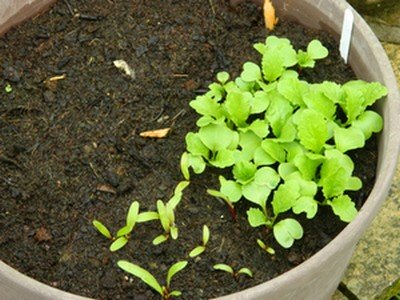
The other consideration is that because your pots will dry out sooner than yard soil will, you will need to make sure that the soil in your pots is always moist without being sodden.
Prepare the soil as for beetroot growing directions above, and don't forget to feed your potted beetroot. A seaweed solution applied regularly will give the best results.
Here is a recipe for homemade container soil:
You can make your own container gardening soil by taking 3 parts of good garden loam, 1 part of moistened peat moss, and 1 part coarse river sand. Added to this should be some well-rotted farmyard manure or compost.In addition to your organic material, you can add the following to every 8 liters of soil:
1/2 cup Epsom salts
1/4 cup coffee grounds (rinse them clean)
4 egg shells (dried and crushed to powder)
To get air into your soil and to make it lighter, add some granular polystyrene, or better still Perlite. A couple of cupfuls to your containers should be enough. Adjust according to the size of the container, but can make up 1/3 of the volume. Don't add too much as it is a water-repellent, and unless you add extra peat moss, you will find that your soil will dry out quicker than you want.
Finally I always add a good handful of
blood and bone to give the vegetables a good start in their containers.
I
am also a fan of
poultry manure more than any other for vegetables because of its high
nitrogen content. Just make sure that it is not fresh, as it will burn
the roots of your vegetables.
When to Harvest Beets
They can be picked at anytime where they are big enough to be useful. Beets can be picked from the time they are about 5 cm in diameter, which is about 8 weeks after planting by seed, or 7 weeks after transplanting. Smaller ones can be picked and steamed. Medium ones can be grated into salads raw, pickled, cooked, juiced with other vegetables etc. However, as already mentioned, if you are going to leave the crop until fully mature, this will happen 10-14 weeks after sowing the seed, depending on the variety.After pulling your beetroot from the soil, twist the tops off 3 - 5 cm above the root crown. Make sure that you do not damage the root crown in any way as this will cause the root to bleed and loss of color will result.
Beets Pests and Diseases
Few ailments bother beets. Brown spots may develop on older leaves that could indicate the presence of a fungal disease, but this is a minor problem which won't affect the crop itself.When growing beets look out for cutworms that you will find on the young seedlings and on the crown of mature plants.
The Best Way to Store Beets
Beets can be stored for several months. Remove any leafy tops first and store in a cool dark location, arranging them so that each piece is quite separate. You can embed them in a box of either straw or sand so that they don't touch each other.Good Beet Varieties
There are many varieties of beets available. The traditional dark red globe beets are still firm favorites with growers. The Derwent Globe, Darkest Globe, and Detroit Dark Red being common varieties, while Rapid Red, Early Wonder and Early Market are recommended for fast growth and maturation.Several globular varieties display unusual concentric circles of pink or red with white, these include the Italian Chioggio, Red-white, Egyptian. For the more adventurous there are both golden and white varieties. Golden Beet, are known for their non-bleeding qualities and the White Albina is said to be sweeter than the standard red varieties. Both are globular shaped and produce tops which can be harvested and cooked like spinach.
Open-Pollinated beets Varieties:
Crosby's Egyptian (56 days to harvest; uniform, sweet, dark red roots; semi-globe to heart shaped; glossy, bright green tops, excellent for greens)
Detroit Dark Red (58 days; tender, round, dark red roots)
Early Wonder (52 days; flattened globe shape; dark red, sweet and tender)
Lutz Green Leaf (70 days; an heirloom winter-keeper type; purplish red exterior, deep red interior; large, glossy green tops, excellent for greens; roots stay tender even when large; stores extremely well)
Ruby Queen (60 days; AAS winner; excellent quality; early; round, tender, sweet, fine-grained, attractive, uniform roots)
Sangria (56 days; ideal globe shape, even in crowded rows; deep red; good greens when young)
Sweetheart (58 days; extra-sweet, round, tasty roots; tops good for greens)
Baby or mini-beets are also available, their small size and early maturing making them favorites for many, especially if you are growing vegetables in containers and are short of space. Two varieties of mini-beets to look out for are Gourmet Baby and Mini Gourmet.Finally, for some really interesting beets that are cylindrical in shape is the Cylindra which is a dark red, and the Sugar, which has a sweet, white, conical root.
So what do you do with your beets once you have grown it?
Livestock and Beets
You can not only feed beets to your domestic animals, but this is also one of the most favorite of foods for pigs, except for parsnips. Feeding pigs beets will result in an excellent condition.How to Cook Beets
Beets can be cooked, steamed, roasted, pickled or even grated raw and placed in salads. If you are an Australian, you wouldn't dream of eating a hamburger without them!They are a versatile vegetable that can be prepared in a number of different ways, including in cakes, as you can see from this recipe below.
Although growing beets today is usually done so for their roots, beets leaves can be used as a spinach, and for hundreds of years this was why they were grown in the first place. The roots were secondary.
So don't just eat the roots, because there is a lot of goodness in the leaves, especially tender and tasty when picked young and placed in a mixed green salad.
Here's a recipe for A Beet Cake which is really delicious! Give it a try!
Beet Cake Recipe
1 cup caster sugar4 eggs, beaten
225 ml sunflower oil
2 large beets, cooked and grated
2 cups self-raising flour
1 teaspoon baking powder
1/2 teaspoon mixed spice
1/2 teaspoon grated nutmeg
Method: Beat sugar, eggs and oil together. Add beets. Into a second bowl sift all the dry ingredients together. Combine contents of both bowls. Pour the mixture into 2 greased 500 g loaf tins. Bake at 175ºC for 40 minutes.
Pickled Beets
Pickled beets are tangy and a definite favorite at BBQs and picnics. Like pickled beans, they must be cooked before they can be pickled; also, unless they are very small, they should be sliced before pickling as the recipe points out.Pickled beets Recipe
4 qt. red beets
2 qt. vinegar
2 c. brown sugar
1 tsp. salt
1/2 tsp. pepper
1 tsp. cinnamon
1 tsp. cloves
1 tsp. allspice
Cut the tops from the red beets, leaving 1 inch of the stems and the roots attached. Scrub well with a vegetable brush, and put to cook in boiling water. Cook until the beets are tender enough to be pierced with a fork. Pour off the hot water and run cold water over them.
Remove the roots and stems, and cut into slices of any desired thickness or into dice, if preferred. Pack into jars or crocks. Then bring the vinegar to a boil, and to it add the sugar, salt, and spices. Pour this hot mixture over the beets. Seal the beets while hot, cool, and store.
Juicing Beets
Beet juice is a good source of vitamin A and C and considered helpful for building up the immune system. See our page on juicing vegetables for some juicing recipes.Scrub young beets and put them through the juicer. This makes an extremely beautiful wine-red juice, which unfortunately tastes very unpleasant. Therefore only small amounts of the juice can be used, and seldom on its own. Mix 2/3 of canned pineapple juice and 1/3 beet juice for a very pleasant drink.
A word of advice. Not all people can drink beet juice as I found out for myself, which I was really upset about, as it is and excellent tonic and has many health properties. However, every time I drink it, no matter what I mix it with, my throat constricts and it makes me feel very uncomfortable. So only drink a little bit, and test to see whether your system tolerates it.
Health Benefits of Beets
Beets are a natural source for sodium, calcium, phosphorus, iron, magnesium and particularly rich in folate and antioxidants.
Folate and folic acid have been found to prevent neural-tube birth defects and aid in the fight against heart disease and anemia.
As a blood cleanser and immunity booster beets is good for those suffering from acne. It is a good anti-cancer food, and one that helps build up the body, especially after an illness. It is beneficial to the lymphatic system and is also a liver cleanser.
Beets are also high in fiber, both soluble and insoluble. Insoluble fiber helps to keep your intestinal track running smoothly and soluble fiber helps to keep your blood sugar and blood cholesterol levels on track.
They also contain a good source of Vitamins A, C and niacin.Nutrition Facts: (1 cup cooked, sliced)
Calories 31
Protein 1.5 grams
Carbohydrate 8.5 grams
Dietary Fiber 1.5 grams
Potassium 259 mg
Phosphorus 32 mg
Folate 53.2 mcg
Vitamin A 58.5 IU
Questions & Answers on Growing Beets
Q. What causes the beets in my garden to develop tops but no roots?
A. The most frequent cause for beet plants failing to develop roots is overcrowding from improper thinning.
Q. What varieties should I grow for beet greens?
A. A special vigorously growing variety, Green Top Bunching, is excellent for producing greens. Crosby Egyptian and Early Wonder also can be used for greens. Planting the seeds 1/2 inch apart without thinning produces an abundance of greens. Swiss chard is a heavy producer of greens very similar to beet greens.
You can Add your own Comments, Tips and Ideas on Growing beets Here!
We have lots of pages where you can contribute to throughout this homesteading website. We love hearing from our readers, and hope you will be one of those we hear from too. Look around our homesteading website. If you have some comments, tips, recipes or ideas on growing beets of your own, please submit them. All you need to do is type and submit. We will do the rest!
Leave a Comment
Do you have anything that you would like to add after reading this page? We would love to hear your thoughts. If you can add additional information to what has been written here you will be adding value to the website! No need to have any special skills - just type and submit. We will do the rest!
Other Comments
Click below to see comments from other visitors to this page...
When to harvest Beetroot 
We may have left our beetroots in the ground for too long. One has a few nodules on the root. How long can we leave beetroots in the ground?
…
can i grow more beetroot leaves after the tops have been cut off the stalks .
I was given one beetroot. I decided to use it as raw grated beet in salads. I now discover it is loaded with nutrients when raw.
I almost threw away …
which is the best beet root variety for higher nitrate content.
I want to know which is the best beetroot variety for higher nitrate content in India.
*
Laximant,
As long as the growing conditions …
growing large beetroot
I have been growing beetroots for the last few years and have used them mainly for pickling.
This year I decided to let my beetroot grow on for a while. …
Beetroot Troubleshooting - Pale Beetroot
Can you explain why some of my beets are a rich dark colour while others are pale and washed out, when they are all grown from the same seed in the same …
Don't miss out on our latest news and articles. Sign up for our free monthly e-zine!


OTHER SECTIONS OF INTEREST
 Natural
Pesticides
Natural
Pesticides Juicing
Vegetables
Juicing
Vegetables Garden
Pests
Garden
Pests Companion
Planting
Companion
Planting Square
Foot Gardening
Square
Foot Gardening
Grow Vegetables
New! Comments
Do you have something of value to add? Leave me a comment in the box below.